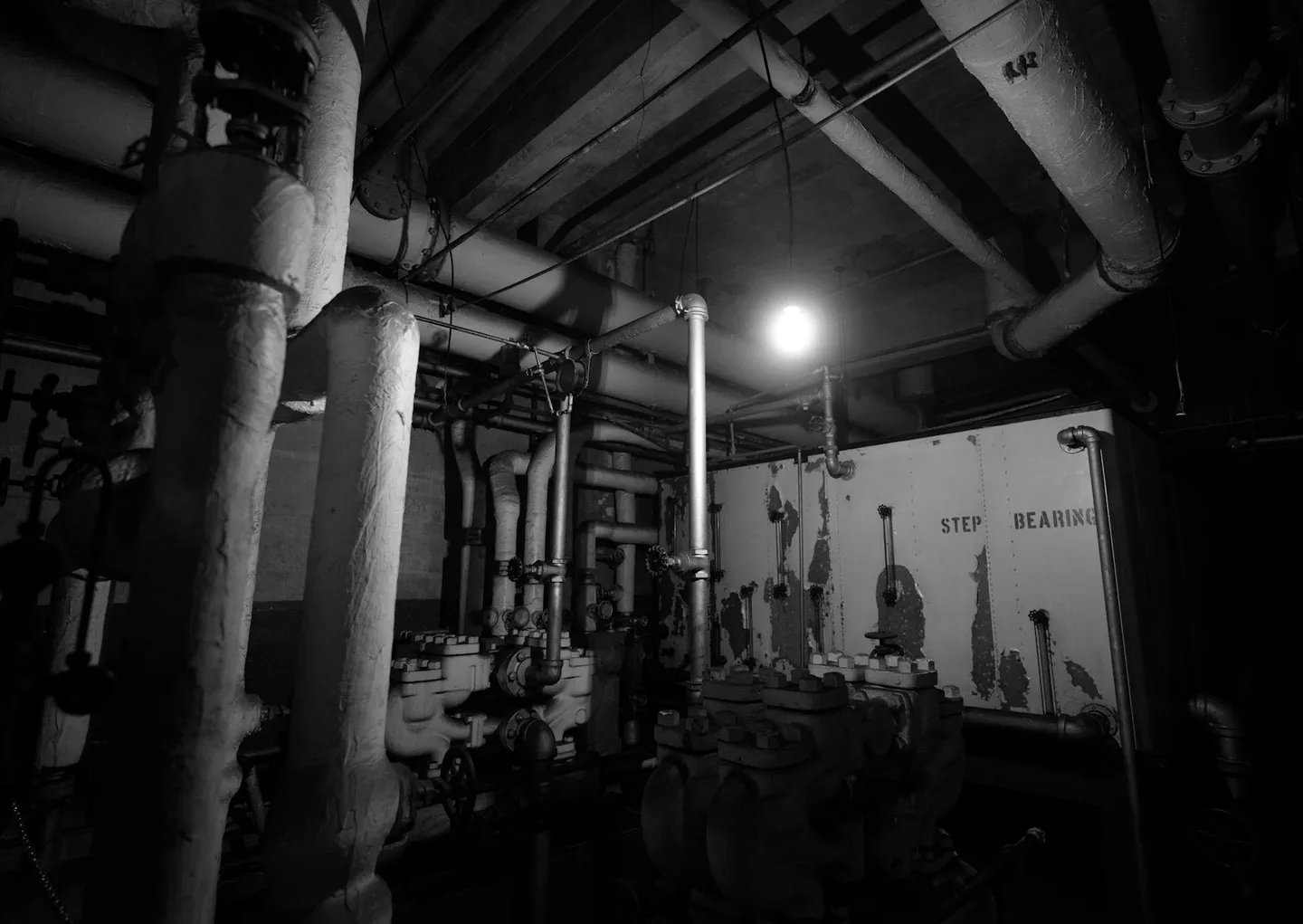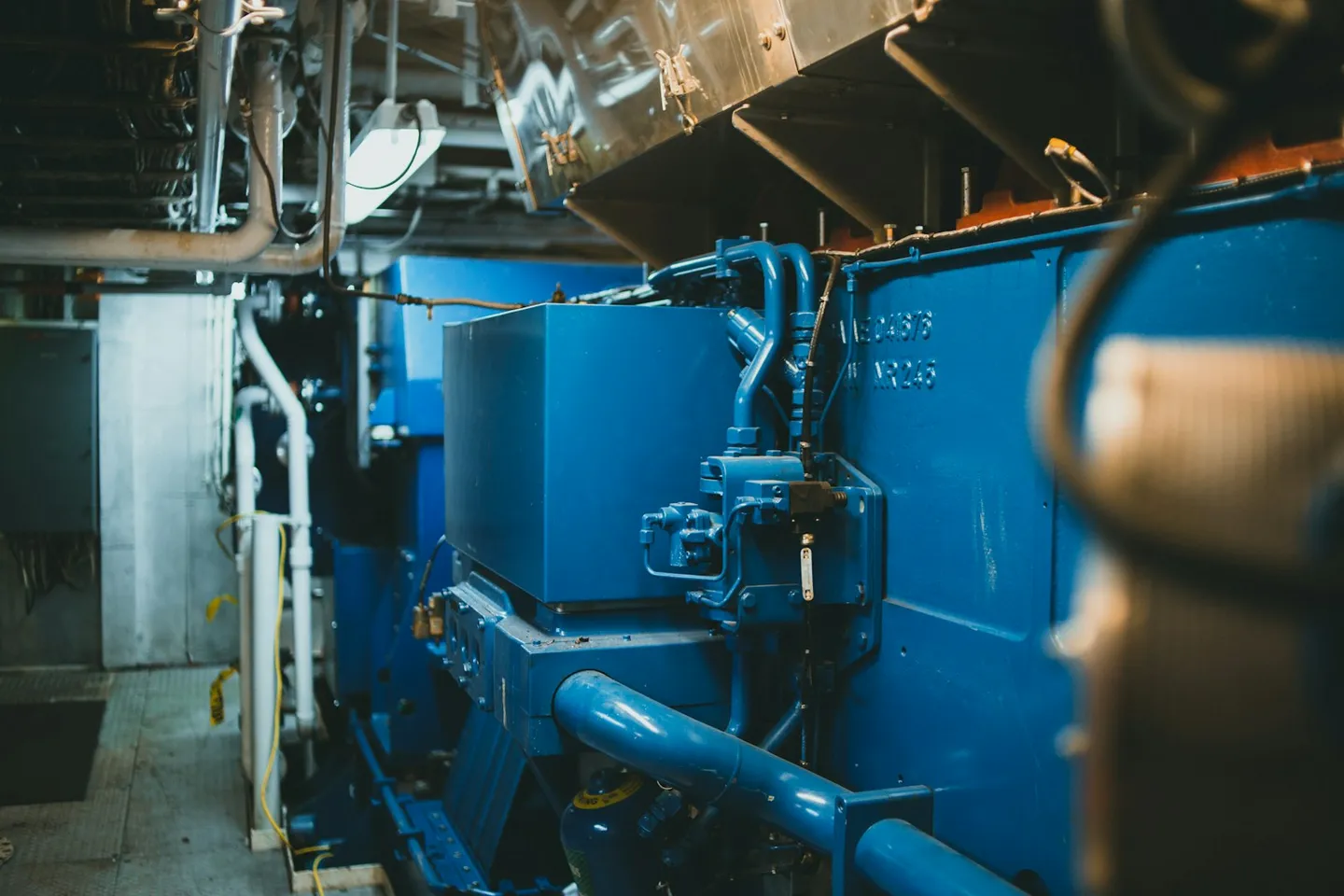
Photo: Commercial plant-room equipment. Photo by Jonathan Cooper on Unsplash.
Most writing on F gas regulations is aimed at installers, gas suppliers and compliance lawyers. Building operators get a different problem. Certified leak checks arrive on a calendar. Stock still spoils, packs still drift and the log still has gaps in the months between those visits. Regulation (EU) 2024/573 is the EU rule that replaced 517/2014. It applied from 11 March 2024. This note is the operator cut: containment duties, leak-check intervals, Art. 7 records, and what refrigeration controller or BMS signals can show between mandatory checks. It is not a phase-down explainer and it is not legal advice.
Great Britain runs its own F-gas regime. Retained Regulation 517/2014 plus the Fluorinated Greenhouse Gases Regulations 2015 (as amended), with Environment Agency reporting and a separate HFC quota system. Northern Ireland follows the EU regime under the Windsor Framework. This article explains the EU regulation. GB readers should treat gov.uk / Environment Agency guidance as authoritative for GB duties.
What 2024/573 changed for operators
The headline for estates is tighter containment, clearer leak-check frequency by charge, and durable records. Operators of stationary refrigeration, air-conditioning and heat-pump equipment that holds enough F-gas must prevent emissions, arrange checks by certified people at the intervals in Art. 5, fit a leakage detection system where Art. 6 requires it, and keep the installation and servicing log for at least five years under Art. 7.
Compared with the 517/2014 era most facilities teams still remember, the operator-facing change is less about inventing a new job title and more about closing gaps. Thresholds and intervals are restated in the new text. The expectation that you can point at a living log, not a folder that surfaces only when an auditor asks, is harder to dodge. Phase-down and placing-on-the-market rules matter to OEMs and gas distributors; they are not the daily workflow for a store estate manager. Your daily workflow is: which packs are in which band, when is the next certified visit, is the log complete, and did anything on the circuit change since the last stamp.
The regulation still sits on certified competent persons for the statutory checks. Your facilities team owns the calendar, the access, the log and the decision to escalate when a circuit looks wrong between visits. That split is where most operator pain lives: the certificate proves a moment in time; the plant runs every hour after. Treat the certified check as a mandatory sample of containment health, not as continuous monitoring. Continuous signals, if you have them, sit beside that sample. They do not rewrite Art. 5.
Who is the operator, and what plant is in scope
In plain terms the operator is the natural or legal person with actual control of the equipment's technical functioning. Landlord vs tenant fights are common on mixed estates. If you schedule the contractor, hold the keys to the plant room and own the service contract, treat yourself as the operator until counsel says otherwise.
Stationary equipment in scope for the leak-check and record duties includes refrigeration, air conditioning and heat pumps that contain fluorinated greenhouse gases above the thresholds below (and are not locked inside foams). For retail and cold-chain estates that usually means pack systems, cold rooms, freezer rooms and large remote cabinets. Office AC and heat pumps on the same campus can sit in the same Art. 5 ladder once their charge clears the threshold; do not build a process that only remembers the freezer rooms.
Small hermetically sealed, labelled kit can fall out under the exemptions in Art. 5. Residential hermetic equipment under 3 kg of F-gas is also treated as out of the routine check table in Commission guidance. Do not assume a walk-in or a pack is "small" without converting the charge to tonnes of CO₂ equivalent (t CO₂e) for Annex I gases, or checking the kilogram thresholds for Annex II Section 1 gases. GWP × kg of refrigerant is how you get to t CO₂e. A mid-GWP blend in a modest pack can still clear 5 t CO₂e; a high-GWP holdover charge clears it faster. If the nameplate and the last service sheet disagree, fix the record before you argue about the calendar.
Leak-check intervals by CO₂e charge
Art. 5 sets minimum frequencies for equipment with ≥5 t CO₂e of Annex I F-gases, or ≥1 kg of Annex II Section 1 gases (not in foams). Annex II kilogram bands run in parallel; the table operators quote most often is the Annex I CO₂e ladder:
| Charge (Annex I, t CO₂e) | Without leakage detection system | With leakage detection system |
|---|---|---|
| 5 – <50 | at least every 12 months | at least every 24 months |
| 50 – <500 | at least every 6 months | at least every 12 months |
| ≥500 | at least every 3 months | at least every 6 months |
Hermetically sealed and labelled equipment is exempt from these checks if the charge stays below 10 t CO₂e Annex I (or <2 kg Annex II Section 1). Label the exemption carefully: sealed does not mean invisible, and a recharge that crosses the band brings the calendar back.
A leakage detection system (Art. 6) is mandatory for listed stationary equipment at ≥500 t CO₂e Annex I (or ≥100 kg Annex II Section 1). It must alert the operator or the service company. The LDS itself is checked at least every 12 months for this class of plant (switchgear LDS intervals differ and are out of scope here). Most individual retail packs sit well below the 500 t CO₂e Art. 6 trigger; the Art. 5 calendar still applies in the lower bands. Large industrial cold stores and some central plant are where Art. 6 shows up first. Know which assets cross that line so you do not invent an LDS obligation for every display case.
Certified leak checking and Art. 6 LDS are statutory instruments. Do not confuse either with operational analytics on pressures and kWh. A ranked anomaly on suction pressure is an operations signal. It can justify bringing the certified person forward. It is not itself the Art. 5 check, and it is not an Art. 6 LDS.
Records under Art. 7
Operators keep F-gas installation and servicing records for at least five years. The log is the audit trail, not a nice-to-have spreadsheet. In practice it should let a competent reader reconstruct: quantity and type of F-gas installed; quantities added during installation, maintenance or leak repair; quantities recovered; identity of the undertaking that performed the work; dates and results of leak checks; and particulars of the leakage detection system where one is fitted. Keep electronic copies where your contractor portal allows it, but own a copy you can still open when the portal changes vendor.
When a certified check finds nothing and a case still runs warm two weeks later, the log is also how you prove you acted. Empty weeks between stamps are what enforcement and insurers notice. If a contractor keeps the only copy in a portal you cannot export, you do not control Art. 7. Ask for an export cadence. Store it where facilities and energy teams can both find the same file.
A practical operator checklist that survives a hand-over:
- Asset list with refrigerant type, charge (kg), GWP basis, t CO₂e (or Annex II kg), hermetic/sealed flag, LDS flag.
- Next certified check date per asset, with the Art. 5 interval that produced it.
- Pointer to the last check report and who performed it.
- Open remedial actions from the last visit, with due dates.
- For Art. 6 assets: LDS alert routing and last LDS function check date.
Between certified checks: what existing signals already show
The statutory visit is a sample. Packs and cold rooms leave a continuous trail if you already trend the controller or BMS points:
- Suction pressure creeping down with superheat creeping up, at stable load and ambient, is the classic slow refrigerant-loss signature.
- Discharge pressure and condenser approach drifting for the same outdoor conditions often means fouling or airflow first, but it also changes how hard a short-charged circuit works.
- Compressor runtime climbing for the same case temperature and weather usually points at fouling or early charge loss.
- Energy intensity on a metered circuit (kWh per cold room, per pack, per store) drifting against a weather-normalised baseline is how many estates notice something before anyone opens a gauge set.
None of that replaces a certified leak check. It is how you decide to call the certified person earlier, and how you brief them with evidence instead of a vague "feels warm." Pair the signal with the Art. 7 log: note when the drift started, what load and ambient looked like, and what you asked the contractor to verify. That turns a reactive call-out into a contained investigation.
FrostLogic Explore reads refrigeration controllers and BMS feeds you already run, reasons over the time series, and returns a ranked queue of abnormal patterns priced by cost of waiting. It is not a leakage detection system in the Art. 6 sense. It does not replace REFCOM or other national certification schemes, and it does not claim to be a regulatory LDS. It is not a CMMS: work orders stay where you already raise them. Between mandatory checks it surfaces drift on circuits you already meter so energy and facilities teams share one ordered list instead of two hundred dashboards. For multi-site retail and cold-chain energy ops, the natural next read is retail energy management.
German operators should also track the national implementing ordinance: the Chemikalien-Klimaschutzverordnung (ChemKlimaschutzV) of 14 April 2026, in force 17 April 2026 (BGBl. 2026 I Nr. 100), which implements 2024/573 and replaces the 2008 ordinance. Certification and Sachkunde detail lives there and in UBA guidance; this note stays on the EU operator duties above. Do not cite a "March 2026" ordinance date; the enacted text is April 2026.
Frequently asked questions
What are the EU F gas regulations for building operators? Regulation (EU) 2024/573, applied from 11 March 2024, replaced 517/2014 in the EU. For operators of stationary refrigeration, AC and heat pumps above the charge thresholds, the practical duties are containment, certified leak checks at Art. 5 intervals, Art. 6 leakage detection where required, and Art. 7 records kept for at least five years.
How often is a leak check required under Art. 5? For Annex I charges of 5–<50 t CO₂e: at least every 12 months, or 24 months with a leakage detection system. For 50–<500 t CO₂e: every 6 months, or 12 with LDS. For ≥500 t CO₂e: every 3 months, or 6 with LDS. Parallel kilogram bands apply for Annex II Section 1 gases. Hermetically sealed labelled equipment below 10 t CO₂e Annex I (or <2 kg Annex II s.1) is exempt from those checks.
When is a leakage detection system mandatory? Art. 6 requires an LDS on listed stationary equipment at ≥500 t CO₂e Annex I (or ≥100 kg Annex II Section 1). It must alert the operator or service company, and the LDS is itself checked at least every 12 months for this plant class.
How long must F-gas records be kept? Art. 7: operators keep the installation and servicing records for at least five years.
Do F gas regulations in Great Britain match the EU rules? No. Great Britain runs retained 517/2014 plus UK secondary legislation, with Environment Agency oversight. Northern Ireland follows the EU regime. Use gov.uk / EA sources for GB duties; this article covers the EU regulation.
Can building analytics replace certified leak checks? No. Certified checks and Art. 6 LDS are statutory. Analytics on suction/discharge, superheat, runtime and energy intensity can flag abnormal patterns between visits so you call a certified contractor sooner. They do not satisfy the regulation on their own.
Does FrostLogic Explore count as an Art. 6 leakage detection system? No. Explore flags abnormal patterns on refrigeration circuits from existing controller or BMS data between mandatory certified checks. It is not an Art. 6 LDS, not a CMMS, and not a substitute for national F-gas certification schemes.
Where do retail estates usually feel this first? Pack systems, cold rooms and freezer rooms: charge bands, check calendars and five-year logs collide with continuous cold-chain energy cost. See retail energy management for the estate-level energy and refrigeration queue.
What's your building not telling you?
If the next certified leak check is months away and a pack already looks wrong on pressure or kWh, start with the signals you already trend. Talk it through if you want a listen-first pass on how a ranked queue would sit on one live refrigeration estate.
FrostLogic Explore brings sensor intelligence, scenario simulation, and grounded-inference AI to commercial and industrial buildings. Learn more about Sensor Intelligence or talk it through with us.
Curious how this would look on your building?
What's your building not telling you?
Twelve questions about your building. About two minutes. Free. You get a Building Intelligence Score. No pitch.