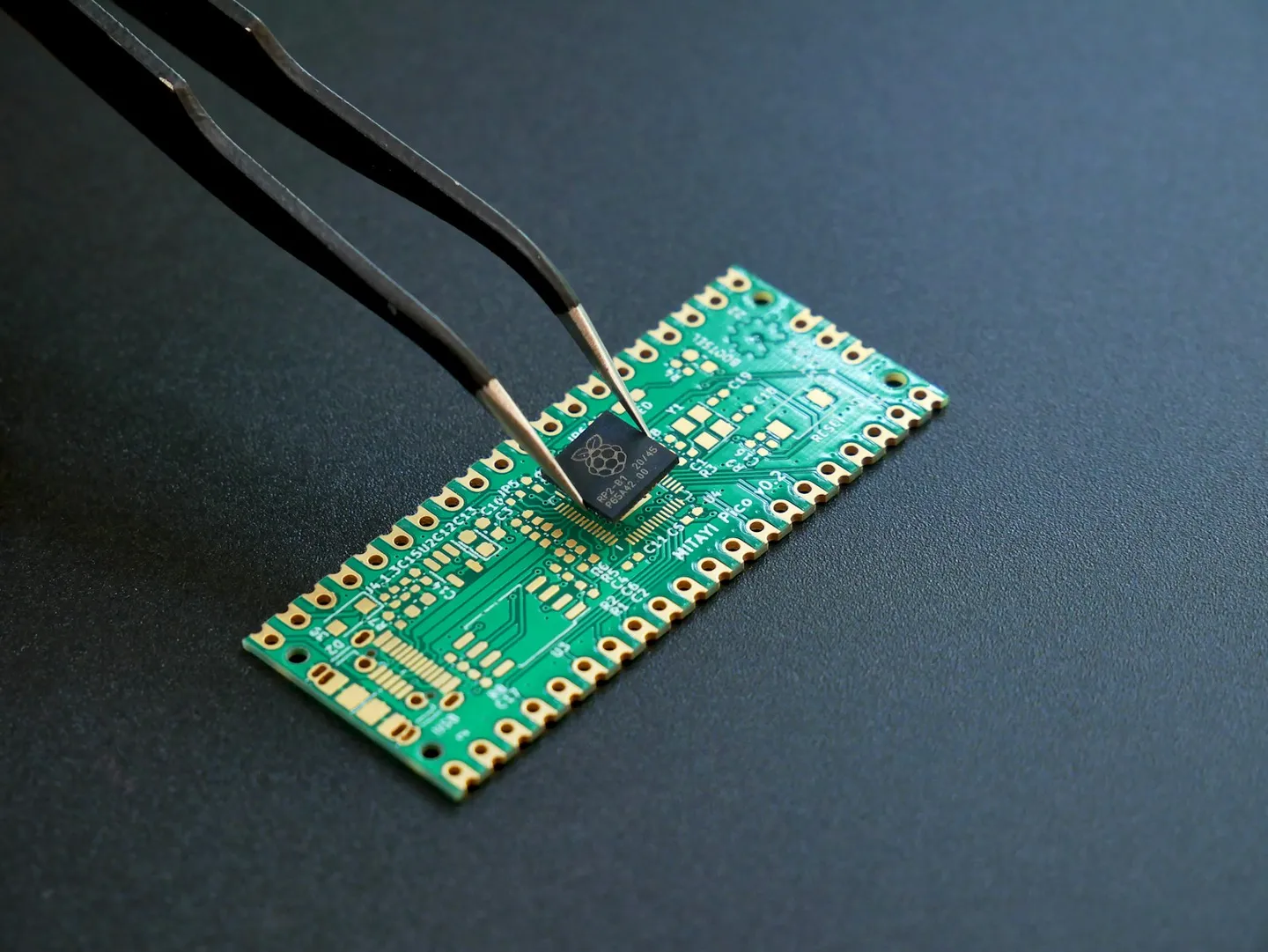
Photo by Vishnu Mohanan on Unsplash.
This one is for the hardware side of the industry: sensor manufacturers, IoT device makers, and the metering and monitoring vendors who build the physical layer a smart building runs on. If you sell sensors and you're weighing whether an analytics partnership is worth the sales-engineering time, this is the case for it, the economics behind it, and what the integration actually involves.
The problem a sensor OEM can't solve alone
A sensor is a component. A building operator doesn't buy components; they buy an answer to "what's wrong and what should I fix first." Your hardware measures accurately, ships reliably, and does exactly what the datasheet promises, and none of that tells a facilities team which of ten thousand readings across a portfolio deserves attention this week. That's a software problem, not a hardware one, and it sits downstream of every sensor you sell, whether you build the analytics yourselves or not.
Most sensor OEMs don't want to build that layer. It's a different discipline, a different hiring problem, and a different sales motion, and building it in-house usually means either years of investment or a thin dashboard nobody asked for. The alternative is partnering with a company that already runs the analytics layer, so your hardware gets sold alongside a reason to buy it, and you stay focused on what you're actually good at: building sensors.
The co-sell economics, plainly
A FrostLogic sensor partnership is a co-sell relationship, not an OEM embed and not a reseller deal. You keep your brand, your channel, and your margin on the hardware. We keep the inference layer: detection, forecasting, and one ranked queue across whatever's reporting into it. Neither side becomes the other's systems integrator, which is deliberately the point, since asking a hardware team to also run a software support desk (or asking a software team to also stock and RMA physical devices) is how partnerships stall.
The commercial logic runs in both directions. A buyer evaluating your sensors for a portfolio rollout is more likely to close, and to close larger, when the pitch already answers "what do I do with the data" instead of leaving that gap for procurement to worry about later. And a building already running Explore is a warm door for hardware that closes a coverage gap the existing estate doesn't have, introduced by a partner who already has the account rather than cold. Neither side is guessing at demand; the queue on one side and the install base on the other are both concrete signals of where the other's product is actually needed.
The gap Explore can't invent its way around
Here's the part that matters most for a hardware audience specifically: analytics can extend what a sensor measures, but it can't manufacture a measurement that was never taken anywhere. Explore runs statistical baselines, forecast residuals, correlation, and physics-based checks across whatever's reporting, and where a point is genuinely missing, a virtual sensor can often infer it from correlated readings already on hand. That's real, useful, and it's not synthetic data: a virtual sensor is a calculation built on ground truth that exists somewhere in the building. What it can't do is stand in for a physical quantity nobody in the portfolio is measuring at all. No amount of modeling turns a building with zero water sensors into one with leak detection, or a plant with no vibration monitoring into one with bearing-wear alerts. The correlation has to exist in real readings first. For how vibration, current and temperature sensors actually feed predictive maintenance models, see that technique piece.
That's a hard boundary, and it's also the actual argument for a hardware partnership rather than a software-only one. Coverage gaps like water and leak detection, indoor air quality, refrigeration and cold-chain condition, vibration and acoustic monitoring for rotating equipment, people-counting and occupancy, these are domains where the fix is a real sensor on a real asset, not a cleverer model. A partnership with the hardware maker who already solved that measurement problem is how the gap actually closes, instead of an analytics vendor pretending a statistical trick can substitute for an instrument that was never installed.
What the integration motion looks like
The technical side is intentionally light for you. Explore reads whatever your device already reports, over whatever interface it already speaks: BMS-side protocols like BACnet, Modbus, or OPC UA where your sensor reports into a building's existing system, or a cloud API where your platform already centralizes device telemetry before a customer's building ever sees it. Either path is reading a data stream that already exists; nothing about the integration asks you to change your firmware, your protocol stack, or your own cloud architecture to fit ours.
Data flows one direction: device to Explore. There's no control channel to design, no command set to expose, and no write-back capability to build into your hardware, because sensor telemetry isn't the kind of point that gets written to in the first place. (Explore's optional write-back capability applies only to BMS control points, setpoints and schedules, on the building side; write access starts off there too, and is turned on only scope by scope when a customer chooses to. It has nothing to do with the sensors you build.) What we ask for on the technical side is usually a short conversation: what protocol or API your device exposes, what the payload looks like, and whether there's a sandbox or test device we can validate against before a joint customer goes live. Most of that lives on our integrations page for the BMS side; for a device that reports through your own cloud platform, the equivalent conversation is API docs and a test account, not a controls project.
What we look for in a first sensor partner
Not every sensor company is the right first partner, and it's worth being honest about what makes a fit real rather than theoretical. The strongest fits solve a measurement problem Explore's existing integrations genuinely don't cover yet, sell into commercial real estate, industrial, or portfolio operators who already look like Explore's buyer, and have a channel or install base where a joint pitch has somewhere concrete to land, an existing customer conversation, not a cold list. A partnership works best when it starts narrow: one shared prospect or one live building, proving the combination is worth more than either product alone before either side commits to anything bigger.
FAQ
What does a FrostLogic sensor partnership actually involve? A commercial co-sell relationship. You keep selling your hardware under your own brand; Explore reads the data it produces and turns it into ranked findings across a building or portfolio. We agree territory, how leads move between us, and a first proof before talking about anything larger.
Is this an OEM embed deal, where our device runs FrostLogic's software, or a co-sell relationship? Co-sell. FrostLogic Explore isn't embedded into your firmware or sold under your brand; it's a separate analytics layer that reads your sensor's output and gets proposed alongside your hardware in deals where the buyer needs both.
Does Explore compete with our hardware or try to replace it? No. Explore doesn't measure anything itself; it has no sensors of its own to sell. It reads whatever hardware is already reporting into a building, yours included, and turns that data into decisions. Your hardware stays the measurement layer; Explore stays the inference layer on top.
Why do you need real sensor partners instead of just modeling the missing data? Because a model can extend an existing signal, not invent one that was never measured. A virtual sensor can infer a point from correlated readings that already exist somewhere in the building, but it can't manufacture a physical quantity, water flow, vibration, air quality, that nothing in the portfolio measures at all. That's a real boundary, not a caveat, and it's exactly the gap a hardware partnership closes.
Does Explore ever write commands back to our devices? No. Sensor telemetry flows one direction, device to Explore. There's no command channel and nothing to build into your hardware to support it. Explore's write-back capability exists only on the BMS control side, setpoints and schedules, starts with write access off there, and gets turned on scope by scope only when a building's own operator chooses to.
What do you need from us technically to get started? Whatever protocol or API your device already reports over, BACnet, Modbus, OPC UA, or your own cloud platform's API, plus a sandbox or test device to validate against before a joint customer goes live. We're not asking you to build a new interface for us; we're reading the one you already have.
What makes a good first partnership move, if we're interested? One shared prospect or one live building, not a master agreement upfront. Tell us what you measure and who you sell to, we'll say plainly where the fit is real, and the first proof point is small on purpose.
If you build sensors, let's talk coverage
Tell us what your hardware measures and who buys it, and we'll say straight whether the fit is real, and what a first joint deal would look like. No manifesto, no procurement pack. Talk it through.
FrostLogic Explore brings sensor intelligence, scenario simulation, and grounded-inference AI to commercial and industrial buildings. Learn more about Sensor Intelligence or talk it through with us.
Curious how this would look on your building?
What's your building not telling you?
Tell us what you're trying to figure out: energy drift, a BMS you don't trust, compliance you're chasing. We listen first, then tell you straight whether Explore helps. 30 or 60 minutes, your pick. No commitment either way.