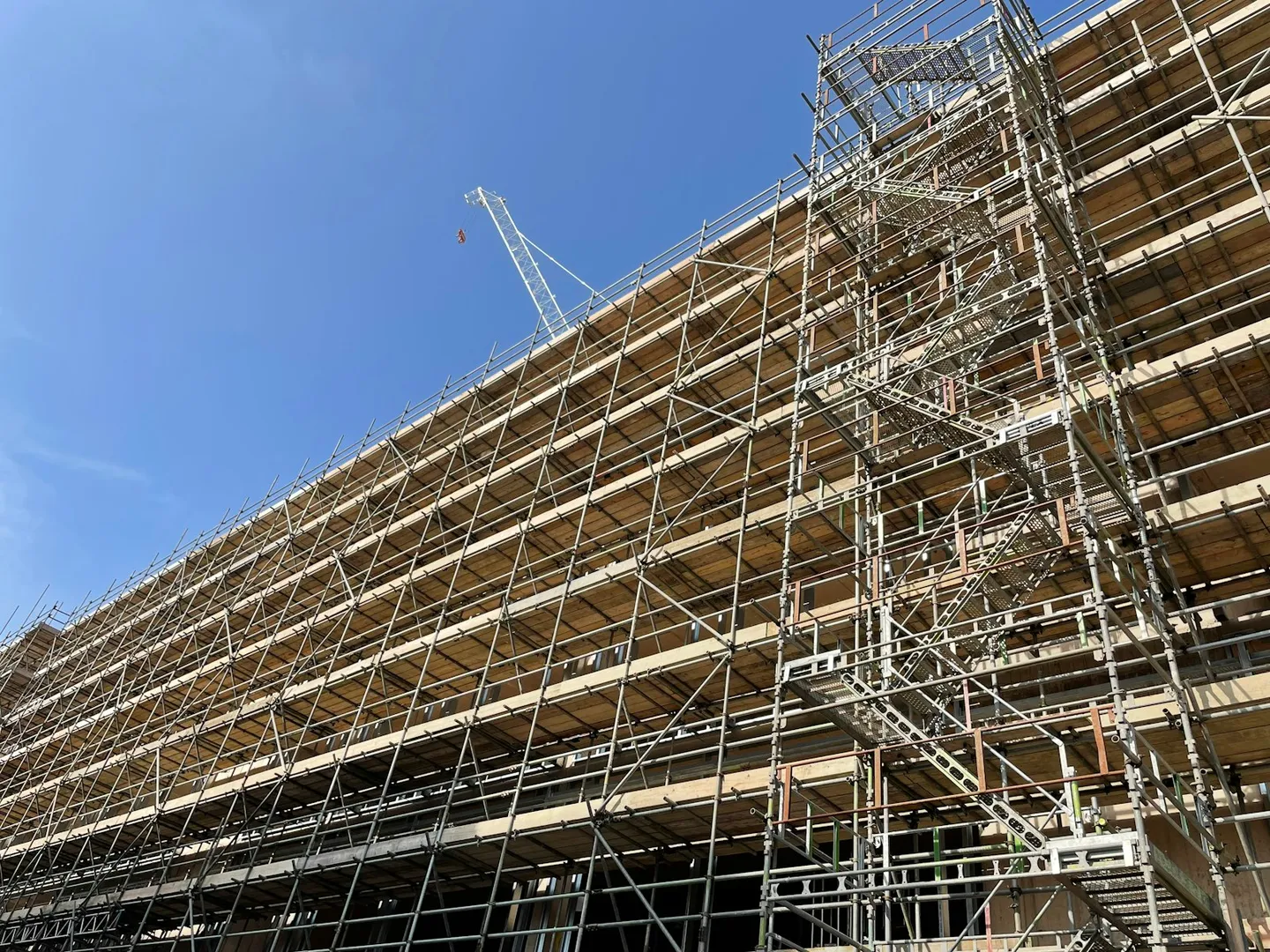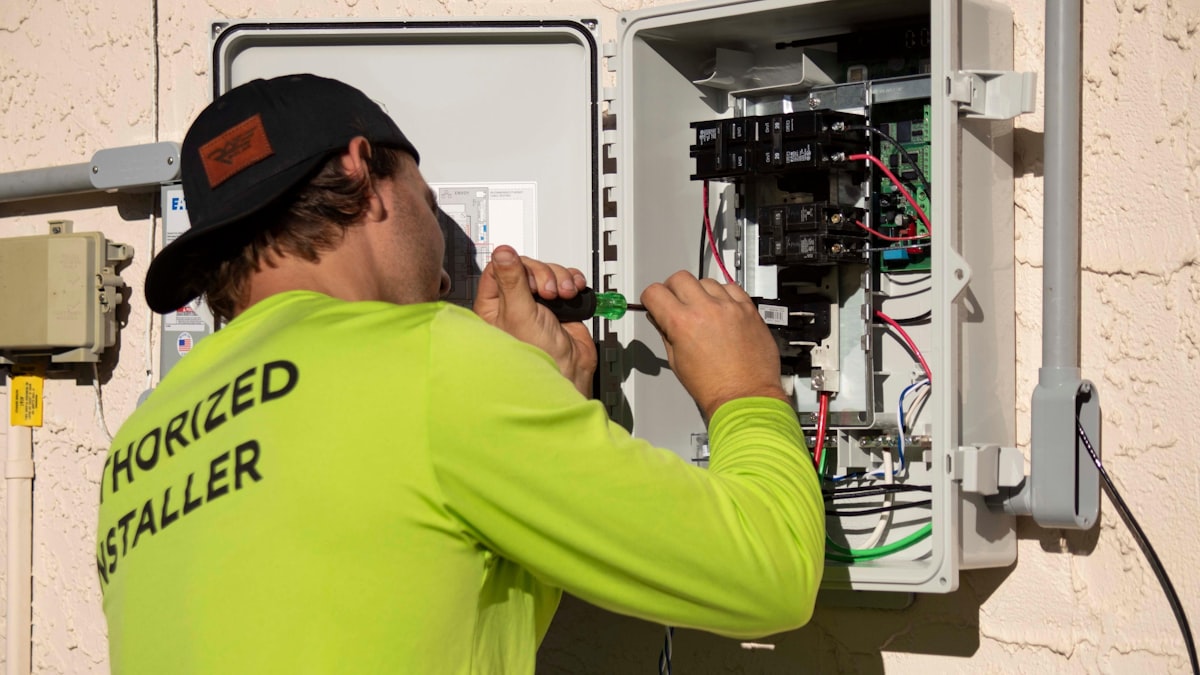
Photo by Raze Solar on Unsplash.
Search “building automation companies” and you get a mix of very different businesses: the big equipment manufacturers who design the controllers, the local firms who show up and wire them in, and a scattering of software vendors somewhere in between. That mix is confusing if you're actually trying to hire someone, because a “building automation company” can mean an OEM with thousands of employees or a five-person integration shop that has serviced the same three office parks for twenty years. This guide is about the second kind: the integrator who shows up, programs the controllers, and keeps the system running after commissioning. If you're working out who to call, what to ask them, and where the warning signs are, that's what follows.
For background on what a building automation system actually consists of, field controllers, a supervisory front end, and increasingly an analytics layer on top, see our building automation systems overview. This piece assumes you already know roughly what a BAS is and want help picking who installs and maintains one.
What is a building management system (BMS)?
"Building management system" and "building automation system" describe the same thing, and buyers often use the terms interchangeably when searching for a vendor. A BMS, sometimes called a BAS, is the layer of field controllers, a supervisory front end, and the network connecting them that runs a building's HVAC, lighting, and other core systems. When you're comparing building automation companies, you're really comparing who installs and maintains that BMS: which controllers they specify, which protocols the system speaks, and who owns the programming once the project closes.
The terminology split mostly comes down to region and vendor: "BAS" is more common in North American engineering specs, while "BMS" shows up more often in European and commercial real estate contexts. Functionally, the two describe the same system. This guide uses "BAS" throughout for consistency with the rest of our building automation content, but if you arrived here searching for a building management system vendor, everything below still applies.
What building automation system integrators actually do
A building automation systems integrator is the contractor who takes a BAS from spec to working system: pulling wire to field controllers, programming sequences of operation, commissioning the points list against the design, and handing over a system that does what the mechanical drawings said it would. Most keep servicing the building afterward too, tuning schedules, troubleshooting alarms, and adding points when a tenant fit-out changes the mechanical layout.
That's different from the manufacturer whose logo is on the panel. Siemens, Schneider Electric, Honeywell, and Johnson Controls design and sell the controllers, but in most markets the actual installation and ongoing service is handled by an authorized dealer or independent integrator, not by the manufacturer's own staff. Knowing which one you're hiring, the OEM's local branch or an independent shop, changes what you should expect on price, responsiveness, and vendor flexibility.
The market is regional by nature, too. A manufacturer might have hundreds of authorized dealers nationally, but the technician who actually shows up to your building typically works for a firm covering a metro area or a handful of counties, not a national account team. That regional structure means local reputation and reference checks matter more here than the brand name printed on the panel.
Building automation companies: manufacturers vs. independent integrators
Two structurally different kinds of company answer to “building automation company.” The first is the OEM and its authorized dealer network: buy through a Siemens or Schneider dealer and you get factory-trained technicians, guaranteed parts availability, and a system fully supported under warranty, at the cost of being tied to that vendor's software and licensing for the life of the system. The second is the independent integrator, often Niagara-certified, who can work across several manufacturers' hardware because they build on an open framework rather than a single proprietary stack. Independents tend to cost less per hour and give you more room to negotiate scope, but support quality varies more from firm to firm than it does with an OEM dealer.
Neither type is automatically the right choice. A single-building owner running one vendor's equipment usually does fine with that vendor's local dealer. A portfolio operator managing buildings acquired at different times, Siemens in one, Schneider in another, tends to get more value from an independent who isn't tied to any single panel.
Questions to ask before you hire a BAS integrator
A handful of questions early in a bid process save a lot of grief later.
- Which BAS platforms and protocols do your technicians actually hold current certifications on, and does that include open protocols like BACnet, Modbus, or OPC UA, or only a single vendor’s proprietary bus?
- Who owns the programming and the points database once the project closes, you or the integrator? Ask this before signing, not after a service dispute.
- What's the response time commitment in the service contract, and is it measured from the call or from technician arrival on site?
- Can you provide three references from buildings your team has serviced for more than two years, not just installed?
- How do you handle a building that already runs a different vendor’s system: rip and replace, or integrate into what’s there?
- What happens to remote access and licensing if we switch integrators later?
New construction vs. adding to an existing BAS
The integrator conversation looks different depending on whether you're specifying a BAS for new construction or extending one that's already running. On new construction, you're choosing a platform more or less from scratch, and the integrator's protocol philosophy, whether they favor an open Niagara-based front end or a closed proprietary one, shapes every decision afterward. On an existing building, the integrator's job is usually narrower: extend the points list for a tenant fit-out, replace failed field controllers, or bring a legacy system's protocol into something an analytics layer can actually read.
Retrofits carry a specific risk worth asking about directly: whether the integrator's default fix for an aging or undocumented system is to propose a partial rip-and-replace rather than working with what's there. Sometimes that's genuinely the right call. It's also, not coincidentally, the option that generates the most billable hardware and labor for the integrator making the recommendation, which is exactly why a second opinion is worth the cost before signing off on a system-wide swap.
Red flags when vetting an integrator
A few patterns are worth watching for. An integrator who won't document the points list, or hands it over only in a proprietary format they control, is setting up a dependency rather than delivering a system you own. Quotes that bundle hardware, labor, and an ongoing licensing fee into one number without breaking out what recurs annually are hard to compare and hard to budget against. And a firm that claims to service every major vendor's equipment equally well is usually strongest on one and thin on the rest; it's worth asking which platform their technicians actually trained on first.
Watch too for integrators reluctant to put response times and escalation paths in writing, or who won't say which subcontractors they use for specialty work like electrical tie-ins. A verbal promise of a 24-hour response carries no weight until it's written into the service contract.
Comparing bids on price alone misses the real question: who ends up controlling the system, and what it costs to change that later, once the contractor leaves the site.
Where an integrator ends and an analytics layer begins
An integrator's job is the physical and control layer: wiring, programming, commissioning, keeping sequences tuned. What most integrators aren't scoped to do is turn years of BAS data into a ranked list of what's actually costing money. That's a separate layer, and it's where FrostLogic Explore sits: on top of whichever BAS your integrator installed, reading the data it already produces and turning it into prioritized findings rather than another dashboard to check. For how that analytics layer works across a BMS, see our BMS analytics platform page.
Explore connects to systems like Siemens Desigo, Schneider EcoStruxure, Honeywell Niagara, Johnson Controls Metasys and Honeywell Trend over each vendor's native protocol, so it doesn't require your integrator to standardize on one platform first or touch the control programming at all. The full list of what each integration exposes and how the connection gets set up is on our integrations hub.
The two roles complement each other rather than overlap: your integrator keeps the control layer running, and an analytics layer tells you and them where to spend the next service call. A good integrator usually welcomes that, since a ranked list of real issues is more useful to their technicians than a call queue full of unfiltered alarms.
In practice, connecting Explore to a building's BAS is usually a short conversation with whoever already maintains the system: confirming which protocol is exposed and opening the right network path, rather than a separate project. Most integrators are already used to fielding a request like this from an analytics vendor and can turn it around during a normal service visit.
Cost and contract structure
Building automation integration pricing usually breaks into three pieces: installation and commissioning labor, hardware and licensing, and an ongoing service contract, and the third piece is where total cost of ownership actually gets decided. A system that looks cheap on the initial quote can cost more by year three if the service contract locks you into per-point licensing fees, or if only one technician at the firm actually understands your programming.
Service contracts typically run one to three years, renewing automatically unless canceled with notice, and often bundle a fixed number of preventive-maintenance visits with unlimited emergency calls billed at an hourly rate. Read the renewal and cancellation terms as carefully as the price: an auto-renewing multi-year contract with a narrow cancellation window is a common way an integrator relationship outlives its usefulness without anyone deciding that on purpose.
Ask for those costs itemized separately, and ask what happens to them if you change integrators later. A system built on open protocols travels with you if a relationship sours; one built on a proprietary bus with licensing tied to the original installer usually doesn't.
FAQ
What does a building automation integrator do? A building automation systems integrator installs and programs the field controllers, front-end software, and network that make up a BAS, then commissions the system against the design and typically keeps servicing it afterward: tuning schedules, troubleshooting alarms, and adding points as the building changes.
What’s the difference between a building automation company and a BAS manufacturer? The manufacturer, Siemens, Schneider Electric, Honeywell, or Johnson Controls, designs and sells the controllers and software. In most markets the actual installation and service work is done by an authorized dealer or an independent integrator rather than the manufacturer’s own staff, so the local firm on your project may or may not be the OEM itself.
How much does building automation integration cost? It varies by building size and how much of the existing wiring and controllers can be reused, but pricing typically breaks into installation labor, hardware and licensing, and an ongoing service contract. Ask for those three itemized separately; bundled quotes make it hard to see what recurs annually.
Are Siemens, Schneider Electric, and Honeywell building automation companies or integrators? Both, depending on the engagement. They manufacture BAS hardware and software, and their authorized dealer networks also perform installation and integration work. Independent integrators, often Niagara-certified, can work across several manufacturers’ equipment rather than one vendor’s stack.
Can one integrator service a building with equipment from more than one manufacturer? Yes, though it depends on the firm. Independent integrators built on an open framework like Niagara are generally set up for multi-vendor sites; an OEM’s authorized dealer is usually strongest on that one manufacturer’s equipment and may subcontract or decline work on a competitor’s panel.
Does FrostLogic Explore replace my building automation integrator? No. Explore analyzes the data your BAS is already producing and turns it into ranked findings; it doesn’t wire controllers, commission points, or replace the ongoing service relationship with your integrator. The two roles run alongside each other, not in place of one another.
How long does a typical BAS integration project take? A single-building retrofit usually runs a few weeks to a few months depending on point count and how much existing wiring survives; a full portfolio rollout across multiple buildings and vendors can take a year or more when phased around occupied-building constraints.
Not sure who to call first?
If you're comparing integrator bids or trying to work out whether the problem is your BAS or what's built on top of it, tell us what's installed and we'll give you a straight read, including when the honest answer is that your integrator relationship is fine and the gap is elsewhere. Talk it through.
FrostLogic Explore brings sensor intelligence, scenario simulation, and grounded-inference AI to commercial and industrial buildings. Learn more about Sensor Intelligence or talk it through with us.
Curious how this would look on your building?
What's your building not telling you?
Tell us what you're trying to figure out: energy drift, a BMS you don't trust, compliance you're chasing. We listen first, then tell you straight whether Explore helps. 30 or 60 minutes, your pick. No commitment either way.