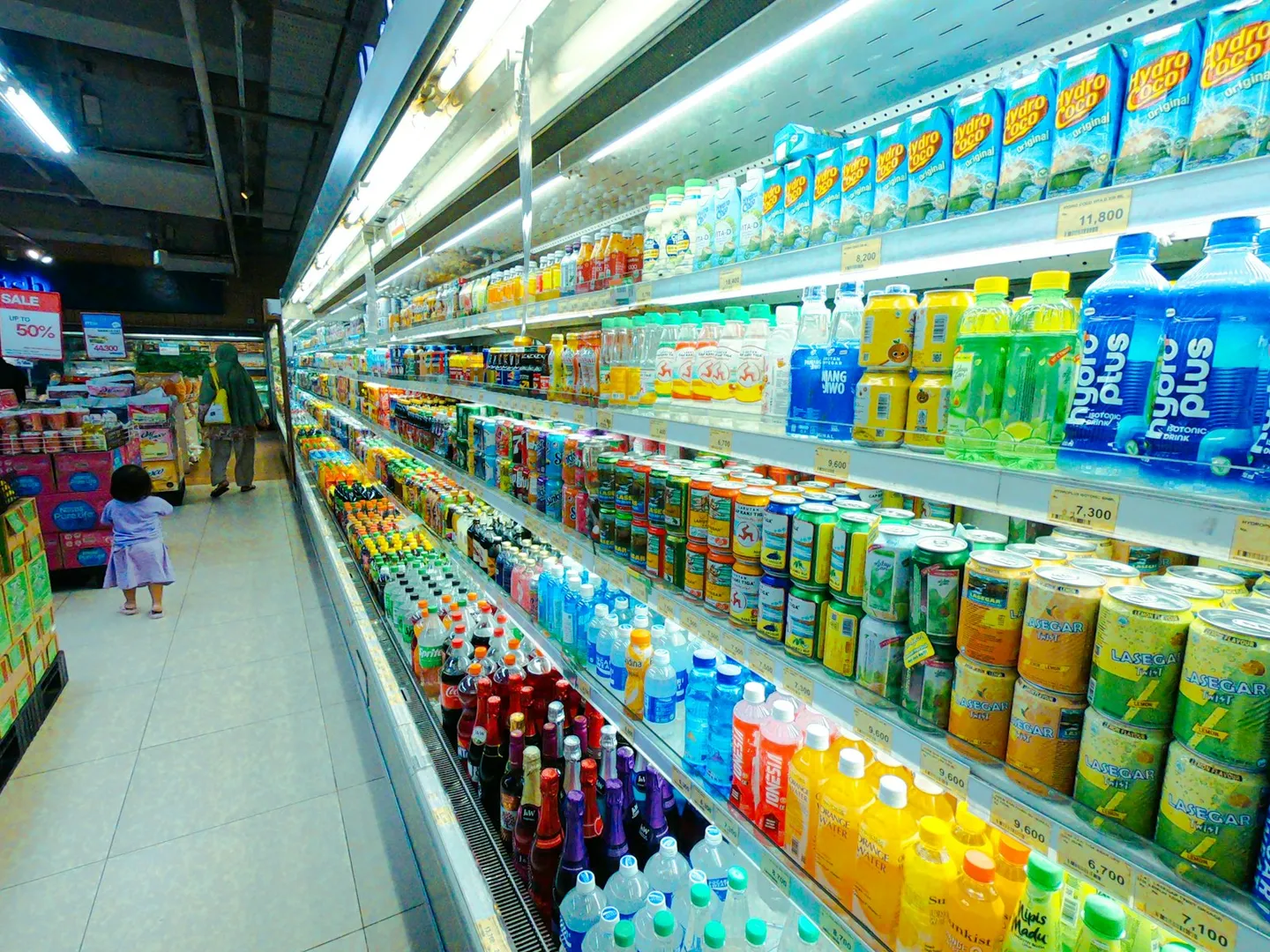
Photo by Galuh hari setiawan on Unsplash.
Search "refrigeration monitoring system" and you land in a pile of wireless temperature kits, OEM cloud portals, and affiliate "10 best" listicles that mix food-safety loggers with plant analytics as if they do the same job. They don't. A probe that texts you when a case is warm is not the same product as a controller portal that deep-dives one brand of rack, and neither is the same as analytics that ranks suction drift across the fleet you already wired. This piece splits the market the way operators actually buy it.
We have a stake in this. FrostLogic builds FrostLogic Explore, which sits in the analytics lane: Sensor Intelligence on controller and BMS points you already have, not a new probe kit and not a HACCP logger. We are not a neutral reviewer. What follows is not a ranked "best of" vendor list. It is a three-way framework. We will say plainly where a wireless temperature monitoring kit or a Danfoss / Carel / Copeland-class portal is the better buy than what we sell.
The three jobs hiding under one search term
Most buyers typing "refrigeration monitoring" want one of three outcomes:
- Food-safety temperature logs — prove the case stayed cold, get an SMS when it didn't, keep an audit trail for HACCP-style checks.
- Deep visibility into one controller brand — alarms, setpoints, and OEM diagnostics for a fleet that mostly runs the same rack controls.
- Prioritised decisions on plant you already instrument — suction, discharge, superheat, runtime, and energy across mixed brands, ranked by what it costs to ignore.
Listicles collapse those three jobs into one shortlist. That is why demos feel mismatched. A remote temperature monitoring box solves a compliance log. An OEM portal solves brand-depth. Analytics solves "which pack is drifting before the case goes warm." Pick the job first.
Sensors and wireless probes
Wireless temperature monitoring and freezer monitoring systems dominate the SERP for a reason: they deploy fast, they are cheap relative to a plant retrofit, and they answer a clear question — is this box inside the band?
What they read is almost always air or product temperature (sometimes humidity, door opens, or a simple power sense). What they hand back is a log and a threshold alert. That is the right tool when the bottleneck is audit evidence for a walk-in or a display case, and when you do not yet need to know why the case is warm.
Limits show up the moment the problem is plant-side. A warm case can be a stuck door, a dirty condenser, a failing compressor, a TXV that lost control, or a slow refrigerant leak. The probe tells you the symptom. It does not rank superheat drift or suction pressure creep across a portfolio. Cold chain monitoring for trailers and warehouses often stays in this probe lane for the same reason: temperature proof beats plant diagnostics when the asset is a box, not a rack.
Vendors in this lane include the usual wireless and probe platforms (SafetyCulture-class loggers, AKCP-style sensor networks, Sonicu, Monnit, and peers). Buy them when food-safety logging is the job. Do not buy them expecting early fault detection on the refrigeration circuit.
Controller and OEM portals
If your estate mostly runs one controls brand, the OEM portal is often the honest first stop. Danfoss Alsense-class cloud, Carel supervision, Copeland / Logix-class rack tools — these products speak the controller's native language. They see setpoints, alarms, and brand-specific diagnostics that a generic analytics layer will not invent on day one.
Strengths: depth on that brand, technician workflows that match the OEM manuals, and often a path to remote setpoint work inside the vendor's trust model.
Weaknesses: mixed fleets. Retail and logistics portfolios rarely stay on one controller forever. Acquisitions, store refits, and contractor preferences leave you with two or three OEM clouds plus a BMS that only sees a subset of points. Each portal is excellent inside its fence and quiet outside it. You end up with three inboxes and no shared ranking of what to fix first.
Controller portals also sit closer to the control plane. That is useful for commissioning and brand support. It is a different job from portfolio analytics that should start from the data you already expose and leave write scopes for you to grant later.
Analytics on controller and BMS data you already have
The third lane — ours — assumes the rack controllers, pack plant, and often the store BMS already publish useful points: suction and discharge pressures, temperatures, superheat proxies, compressor runtime, defrost state, sometimes energy meters on the pack. Explore and the wider BMS analytics surface read those points, run anomaly detection with causal filtering, and put findings in an Attention Queue ranked by cost of ignore. Seven detector types cover the patterns we see across plant; refrigeration shows up as suction/superheat drift, short-cycling, simultaneous fighting loads, and energy waste on packs that never idle.
This lane is weak when you have no points on the bus. If the walk-in only has a dial thermometer, you need a probe or a controller upgrade first. It is also the wrong buy if your only requirement is a certified food-safety temperature log — Explore is not a HACCP logger and does not pretend to be. For operators who already calendar certified F-gas leak checks, continuous plant signals between those visits are useful context (see F-gas regulation for building operators where that guide applies); they do not replace Art. 6 leak-detection systems or certified inspections.
For the refrigeration signal catalogue — suction, superheat, dirty condensers — the companion explainer is predictive maintenance for buildings.
Evaluation criteria, scored honestly
Score each lane against the criteria buyers actually argue about. "Win" means strong fit; "lose" means buy something else for that row.
| Criterion | Sensors / probes | OEM controller portal | Analytics on existing data (Explore) |
|---|---|---|---|
| Fast deploy, little IT | Win | Mixed | Mixed (needs points on the bus) |
| Food-safety temperature audit log | Win | Mixed | Lose |
| Depth on one controller brand | Lose | Win | Mixed |
| Multi-brand / mixed fleet view | Lose | Lose | Win |
| Early fault vs threshold-only | Lose (threshold) | Mixed | Win |
| Energy + refrigeration in one queue | Lose | Mixed | Win |
| F-gas / leak evidence between certified checks | Lose | Mixed | Mixed (context, not Art. 6 LDS) |
| Who owns the data if you leave | Mixed | Mixed | Win (export; EU-hosted on Hetzner) |
Explore loses the food-safety logger row on purpose. A probe kit wins that row every time. OEM portals win single-brand depth. We win when the estate is mixed, the points already exist, and the team needs a ranked queue rather than another dashboard.
The map is the table. Your estate still picks the lane. Next step is a free check on one building: we connect a sample of the points you already have and show what Explore would put in the queue. If it does not earn its place, you keep the findings. Check one of my buildings.
Where Explore fits, and where it does not
FrostLogic Explore is Sensor Intelligence for commercial plant. On refrigeration it reads points already on the controller or BMS bus, runs the seven anomaly detectors, and returns prioritised decisions with evidence. Hosting is EU (Hetzner). Connection starts read-only by default; you grant write scopes when you want automation inside a defined boundary. Smart Schedules stay default-off unless a pilot turns them on.
Explore is not a HACCP temperature logger. It is not an Art. 6 leak-detection system and does not replace certified F-gas checks. It is not a CMMS, not a BACS, and not an ESCo. Protocols we support include BACnet, OPC UA, Modbus, MQTT, M-Bus and oBIX — "supported," not invent-a-driver-on-demand.
If your problem is a single-brand rack fleet and the OEM portal already answers the technician, stay there. If you need wireless probes for audit logs, buy probes. If you need energy and refrigeration across a store estate in one ranked queue, that is the retail energy management hand-off: store refrigeration plus HVAC energy, not a discontinued footfall product.
How this sits next to related comparisons
Buyers often arrive here from adjacent shortlists. The category map for analytics labels is building analytics software. Head-to-head predictive tools live in best predictive maintenance software. BMS-centric platforms are in best BMS analytics platforms. AI-branded energy tools are in best AI energy management tools. The honest energy-management roundup is best building energy management software.
FAQ
What is a refrigeration monitoring system? A loose label covering wireless temperature probes and loggers, OEM controller portals for rack and pack plant, and analytics platforms that read controller or BMS points you already have. The label alone does not tell you which job a vendor sells.
Sensors vs controllers vs analytics — which do I need? Sensors win food-safety temperature logs and fast deploy. Controller portals win depth on one OEM brand. Analytics wins multi-brand fleets and early fault / energy ranking on points already on the bus. Many estates end up with probes for audit cases plus analytics on the pack plant.
Is temperature-only monitoring enough? For compliance logs and "is the box warm," yes. For finding why a case drifts or which pack is wasting energy overnight, no. Temperature is the symptom; suction, discharge, superheat and runtime are usually the earlier tell.
Wireless vs wired temperature monitoring — does it matter? For food-safety loggers, wireless wins on install speed and store disruption. Wired can be cleaner in plant rooms and cold rooms with harsh RF. Neither choice turns a probe into plant analytics.
How is cold chain monitoring different from plant refrigeration monitoring? Cold chain monitoring usually means proving product temperature through transport and storage. Plant refrigeration monitoring watches the compressors, evaporators and controls that keep the cases cold. Same physics family, different buyer job.
Can analytics replace certified F-gas leak checks? No. Continuous suction and superheat context between checks helps operators notice drift earlier. It does not replace certified inspections or Art. 6 leak-detection obligations. See F-gas regulation for building operators.
When is a probe kit enough? When the requirement is an audit log and threshold alerts on specific boxes, and you are not asking for multi-site plant ranking. Add analytics when packs already publish points and the team is drowning in alarms without a cost-ranked queue.
When does an analytics layer like Explore win? Mixed controller brands, points already on the BMS or pack controllers, and a need for one Attention Queue across refrigeration and the rest of the building. Start with a free building check rather than a fleet roll-out.
What does Explore cost for this? Public list pricing: AI Automation is €1,500 per building per year; AI Maintenance starts from €5,450 per building per year by sensor band. Free 90-day pilot on one building. Details on pricing. No invented discounts in this article.
Want the same map against your own store or cold room? Pick Check one of my buildings on the contact form. We connect one building and show you what comes back. If it does not earn its place, you keep the findings. Check one of my buildings.
FrostLogic Explore brings sensor intelligence, scenario simulation, and grounded-inference AI to commercial and industrial buildings. Learn more about Sensor Intelligence or talk it through with us.
Curious how this would look on your building?
What's your building not telling you?
Twelve questions about your building. About two minutes. Free. You get a Building Intelligence Score. No pitch.