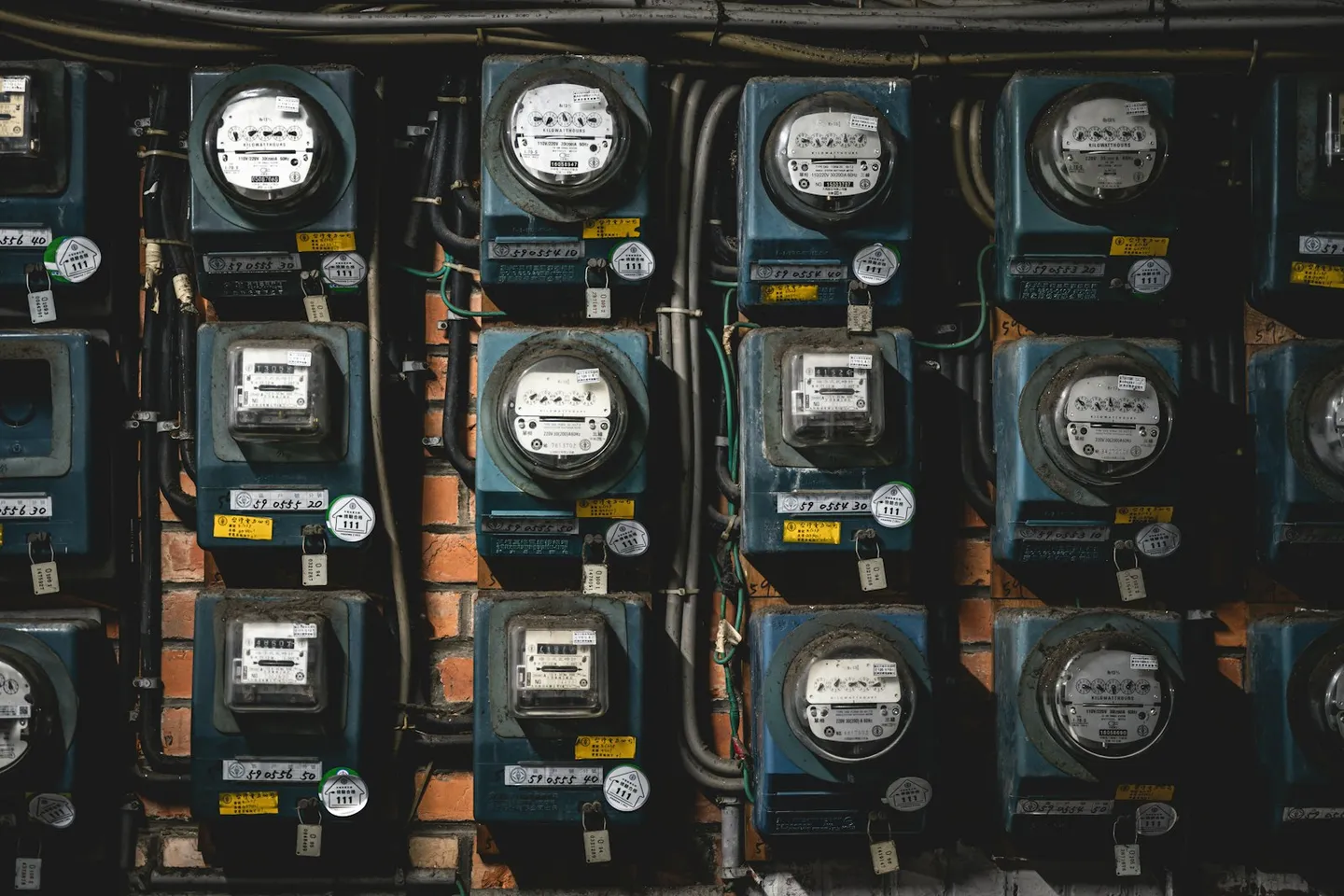
Photo by Fiqih Alfarish on Unsplash.
A commercial building energy audit tells you where a property is wasting energy on the one day someone walks the site with a clipboard and a set of gauges. That's useful. It's also incomplete. The report lands, the recommendations get filed into a capital plan or a work order, and six months later nobody can say whether the building held the line or drifted back to its old habits.
This piece isn't an argument against commissioning a commercial energy audit. You should. It's about the part most owners underestimate: what happens after the auditor packs up the gauges and leaves.
What a commercial building energy audit actually covers
A commercial energy audit is a systematic assessment of how a non-residential property uses energy: the building envelope, HVAC plant, lighting, controls, domestic hot water, and how occupants actually run the space against how it was designed to run. A business energy audit differs from a residential one in scope and stakes. Operating hours, process loads, and often a whole portfolio of comparable assets all factor into the analysis in a way a single-family home audit never has to consider.
Audits get commissioned for a handful of reasons. A local benchmarking ordinance requires one, and our guide to energy benchmarking and ENERGY STAR Portfolio Manager covers exactly what that scoring involves. A lender or utility incentive program wants investment-grade numbers before releasing funds. A certification track like BREEAM, LEED or ENERGY STAR needs a baseline. Or an owner just wants to know where the money is going before a lease renewal or a capital planning cycle. Whatever the trigger, the auditor’s job is the same: translate a year of utility bills and a walkthrough into a ranked list of what to fix first.
The output always looks roughly the same too: a baseline, a list of energy conservation measures, and an estimate of what fixing each one is worth. How much rigor goes into that estimate is what the ASHRAE levels describe.
ASHRAE Level 1 vs Level 2 vs Level 3: scope, cost per square foot, and findings
ASHRAE's three-tier framework (Procedure 4.9 in the Fundamentals handbook) is the industry's default scoping tool. Most RFPs for a commercial energy audit reference it directly, so it's worth knowing what each tier actually buys.
**Level 1: Walk-Through Analysis. **A site visit plus a review of twelve to twenty-four months of utility bills. The auditor benchmarks the building against comparable stock, flags obvious waste (bad scheduling, dead lighting runs, an economizer stuck open) and hands back a short list of low-cost or no-cost measures with a rough payback. Typical commercial energy audit cost per square foot: $0.05 to $0.15. It works well for screening a portfolio or clearing a basic benchmarking mandate, and not much beyond that.
**Level 2: Energy Survey and Analysis. **This is the level most owners actually need. It adds sub-metering or trend data, a breakdown by end use (HVAC, lighting, plug loads, process) and engineering calculations for each measure: cost, savings, simple payback, sometimes a rough carbon estimate. An ASHRAE Level 2 energy audit is usually what a utility incentive program or a green-lease clause asks for, because it carries enough detail to support a financing decision. Typical cost: $0.15 to $0.30 per square foot.
**Level 3: Detailed Analysis of Capital-Intensive Modifications. **Investment-grade. Sub-metering, calibrated energy modeling, and detailed engineering for the specific measures an owner is about to spend real money on, a chiller plant replacement, a full BAS overhaul, a deep envelope retrofit. Cost typically runs $0.30 to $0.50 or more per square foot, and the deliverable is precise enough to bring to a lender or a capital committee. Most buildings never need a Level 3. It's reserved for measures big enough to justify the modeling cost.
What a good audit report actually contains
A commercial building energy audit report worth paying for has a few non-negotiable parts: a weather-normalized baseline (so a mild winter doesn't get mistaken for an efficiency win), a benchmark against comparable buildings, and an itemized list of measures ranked by cost, savings and simple payback.
The part that gets skipped most often is a measurement and verification plan: a description of how anyone will know later whether a measure actually delivered. An ECM list without a verification step is a wish list. If nobody re-checks the chiller sequencing six months after it was 'fixed,' the report's value starts decaying the day it's filed.
Energy audit companies, energy audit software, and where they overlap
Energy audit companies range from independent engineering firms to the efficiency arms of large mechanical contractors, and the reputable ones are honest about scope. A firm that only does Level 1 walkthroughs shouldn't be pitching investment-grade Level 3 work, and vice versa. What varies more than firm size is whether the auditor uses energy audit software to pull utility and BMS data automatically or still builds the baseline by hand from PDF bills. The former catches more and moves faster. The latter is still common on smaller jobs.
Where this gets confused is assuming audit software and continuous monitoring software are the same category. They aren't. Audit software supports the one-time assessment, pulling a year of history into a model so the auditor can write the report. It doesn't watch the building after that report ships. That's a separate job, and it's the one most owners don't have covered.
What happens after the audit report lands on a desk
Here's the part the audit itself can't do: prove the findings still hold six months later. The report is a snapshot, a baseline plus a set of recommendations, dated the day the auditor left the site. Buildings don't stay still. Staff turn over. A technician overrides a setpoint during a hot week and forgets to reset it. A controller firmware update quietly changes a default. None of it shows up until the next audit, which might be two or four years out.
This isn’t an argument against the audit. A Level 2 or Level 3 report is still the right tool for setting a baseline, meeting a compliance mandate or building the case for capital spend, and no monitoring platform substitutes for the credentialed judgment behind that report. What continuous monitoring covers is the gap between audits: watching the same meters and BMS points the audit flagged, and catching a regression the week it happens instead of the year of the next re-audit. Explore reads the building continuously and flags drift against its own baseline. Not instead of the audit. In the months the audit report can’t see.
For a single property, that usually looks like energy management for commercial buildings: weighing energy against tenant comfort rather than chasing savings that push comfort out of band. Owners running several buildings across different BMS vendors face a scaled-up version of the same problem, which is what building management system analytics for portfolios is built for. And if a specific pattern from your last audit was quietly burning energy, simultaneous heating and cooling, schedules nobody corrected after a tenant change,
our piece on energy waste detection walks through the failure modes that usually stay invisible until the next Level 2 report.
There's also a related but distinct process worth knowing about: commissioning. An audit tells you where energy is going. Commissioning is the process of verifying, and fixing, whether a building's systems perform as designed in the first place. We cover that ground in our guide to building commissioning, retro-commissioning and MBCx. If the same audit findings keep resurfacing every cycle, that’s often a commissioning problem wearing an energy-audit costume. For the wider UK operator sequence that puts the audit before continuous monitoring and retrofit spend, see energy efficiency in commercial buildings. For the regulatory side of all this, EPBD, BACS, and the certification frameworks an audit often feeds into, see our compliance hub.
FAQ
What is a commercial building energy audit? A systematic assessment of how a non-residential property uses energy, covering the envelope, HVAC plant, lighting, controls and hot water, that benchmarks current performance and produces a ranked list of measures to cut waste. Most audits are scoped to one of three ASHRAE levels.
What's the difference between an ASHRAE Level 1, 2 and 3 audit? Level 1 is a walkthrough plus a utility bill review with rough paybacks. Level 2 adds metering and engineering-grade calculations for each measure. Level 3 is investment-grade, with calibrated modeling detailed enough to support a major capital decision.
How much does a commercial energy audit cost per square foot? Cost scales with depth: roughly $0.05 to $0.15 per square foot for a Level 1 walkthrough, $0.15 to $0.30 for a Level 2 survey, and $0.30 to $0.50 or more for an investment-grade Level 3 audit.
How often should a commercial building get audited? Most benchmarking ordinances and certification tracks ask for a re-audit every two to five years. That leaves a long gap where drift goes uncaught, which is why owners increasingly pair audits with continuous monitoring between cycles.
Does an energy audit replace the need for ongoing monitoring? No. An audit is a point-in-time baseline and recommendation set. It doesn't track whether those recommendations still hold three months later. Continuous monitoring picks up where the audit report leaves off.
What should a commercial energy audit report include? A weather-normalized baseline, a benchmark against comparable buildings, an itemized and ranked list of energy conservation measures with cost and payback, and ideally a measurement and verification plan for confirming savings after implementation.
What's your building not telling you?
Tell us what you’re trying to figure out: energy drift, a BMS you don’t trust, compliance you’re chasing. We listen first, then tell you straight whether Explore helps. 30 or 60 minutes, your pick. No commitment either way.
FrostLogic Explore brings sensor intelligence, scenario simulation, and grounded-inference AI to commercial and industrial buildings. Learn more about Sensor Intelligence or talk it through with us.
Curious how this would look on your building?
What's your building not telling you?
Twelve questions about your building. About two minutes. Free. You get a Building Intelligence Score. No pitch.