Photo by Carl Wragg on Unsplash.
Condition monitoring is the practice of watching an asset's actual condition through its sensor signals, so that degradation becomes visible before failure does. It sits between running a machine until it breaks and servicing it on a fixed calendar, and it swaps assumption for measurement. In a commercial building that means pumps, fans, air handling units, chillers and the motors that drive them, watched through data the building automation system is already collecting.
Most published material is written for factories. What transfers to buildings, and what does not, is covered below.
What is condition monitoring?
Condition monitoring means measuring one or more parameters of a machine, tracking how they move over time, and using that movement to judge its health. Vibration, temperature, current draw, pressure, flow. A single reading tells you almost nothing. A trend in that reading, compared against the machine's own history and against its identical siblings, tells you a great deal.
ISO publishes general guidelines for this under ISO 17359, which sets out the loop: choose the equipment, decide which parameters carry information about its failure modes, establish a baseline, measure, compare, act. Nothing in that loop is specific to a paper mill.
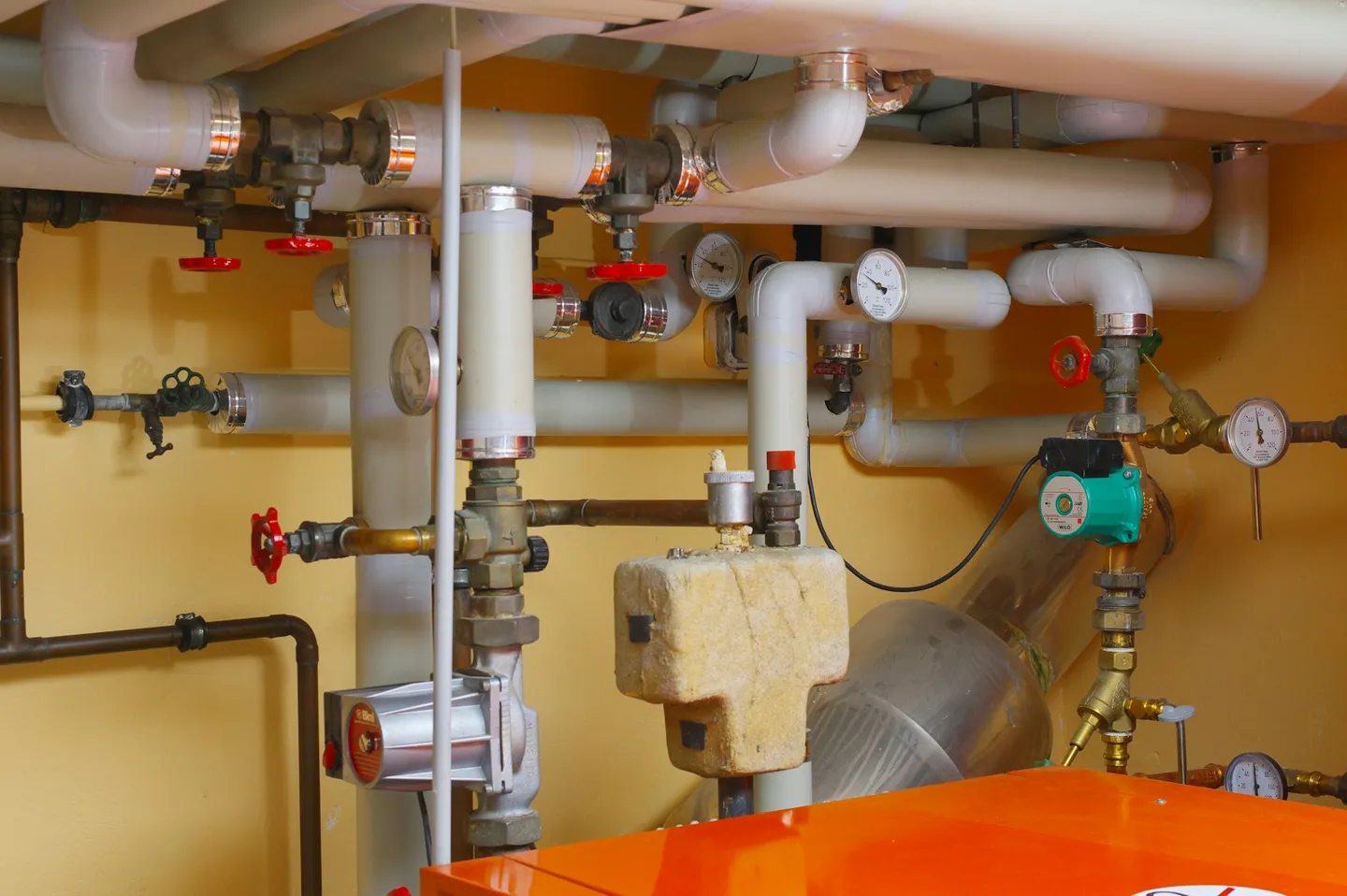
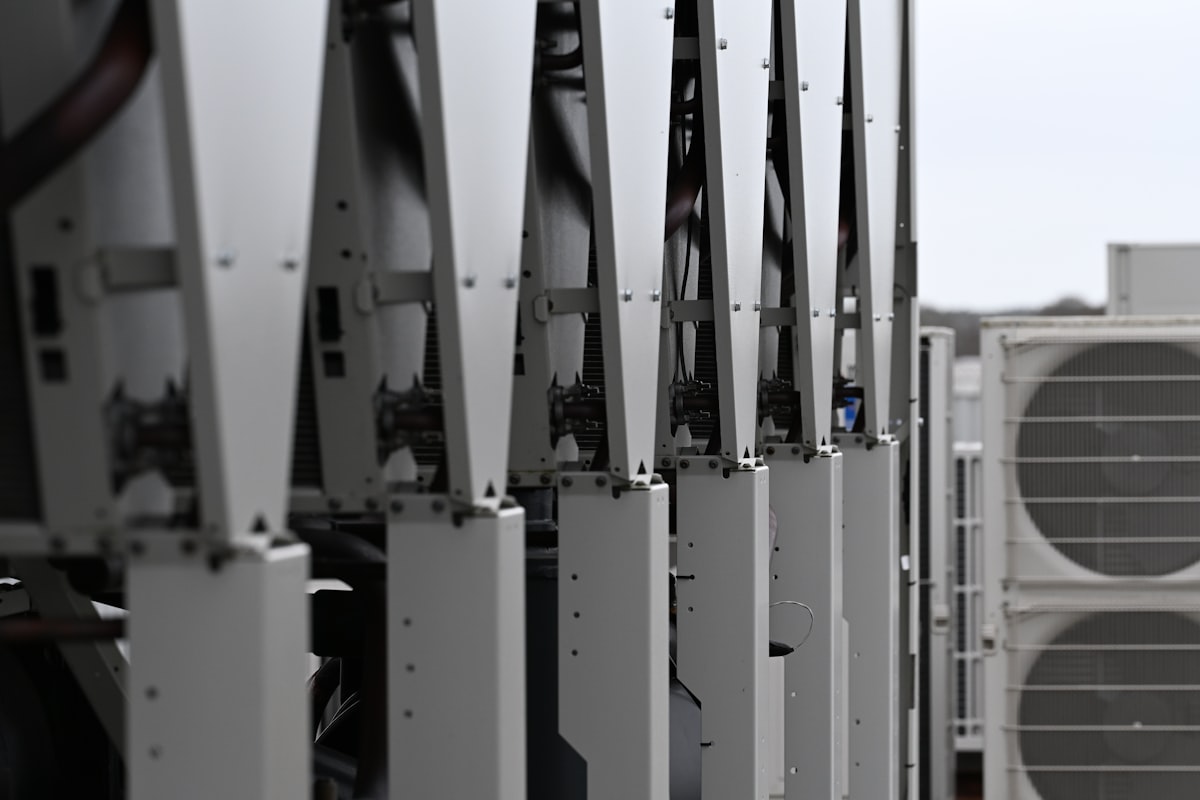
In a building, the assets worth the treatment sit in the plant room and on the roof. Chillers and their compressors. Boilers. Primary and secondary pumps. Cooling towers. Air handling units and their fans. The BMS is already trending most of what those assets report, usually at fifteen-minute resolution and often for years back. Asset condition monitoring therefore rarely begins with a hardware project. It begins with data already sitting, unread, in a historian.
Industrial condition monitoring vs condition monitoring for buildings
Most published material on condition monitoring is about factory rotating machinery. Bearings, gearboxes, shaft alignment, large motors instrumented with accelerometers from day one. Vibration spectra, oil analysis, ultrasonic listening. That literature assumes machines whose failure costs enough to justify dedicated instrumentation, and whose duty cycles are steady enough that a baseline holds.
The technique transfers. You still choose the equipment, pick parameters that carry failure-mode information, establish a baseline, measure, compare and act. ISO 17359 does not care whether the shaft is in a paper mill or a plant room.
The economics and the instrumentation usually do not. Commercial-building machines are smaller. A chilled-water pump rarely carries the same failure cost as a process-critical gearbox, and almost never arrives with vibration sensors specified at handover. What buildings do have is years of BMS and meter historian data: current, temperatures, pressures, valve feedback, runtime hours, already collected at fifteen-minute resolution and often unread.
So a buildings programme starts from that historian, not from a sensor catalogue. Add-on vibration hardware has a place on critical assets, but it is the second step. Treating industrial condition monitoring literature as a drop-in buildings programme is how teams stall: they budget for accelerometers before they have read the trends their BMS already holds.
For factory rotating plant and process-critical duty, the published industrial playbooks remain the right reference. This article is about the commercial-building version of the same discipline.
Condition monitoring, predictive maintenance and FDD
The three terms get used interchangeably in vendor material, and they should not be. They describe different things that overlap heavily in practice.
| Discipline | What it is | The question it answers | What typically triggers it | Where it sits in a building |
|---|---|---|---|---|
| Condition monitoring | Watching asset condition through sensor signals over time. | Is this asset degrading? | A signal drifting from the asset's own established normal. | The plant room. Pumps, fans, chillers, compressors, motors. |
| Predictive maintenance | What you do with condition data: scheduling work before failure, not after. | When should we intervene, and on which asset first? | A forecast that a trend reaches a failure point inside a given window. | The maintenance plan and the work-order backlog. |
| Fault detection and diagnostics | A rules and analytics layer identifying specific faults in HVAC and control sequences. | What exactly is wrong, and why? | A rule matching a known fault signature, such as simultaneous heating and cooling. | The BMS and the control sequences running on it. |
The overlap is real. Condition monitoring feeds predictive maintenance, because without condition data there is nothing to predict from. FDD overlaps with condition monitoring wherever a fault rule reads the same signal, say a supply fan running outside its normal current band. The distinction that matters operationally is scope. FDD is strongest on control sequences, where the fault library is mature and the failure is a wrong setpoint or a stuck damper. Condition monitoring is strongest on mechanical degradation, where nothing has faulted yet and the only evidence is a slow drift. Either way, the findings only hold when the underlying readings are trustworthy. We covered the common smart building sensor data failures that break that trust separately.
Which signals carry condition information
Building equipment condition monitoring: where the programme starts
Building equipment condition monitoring in a commercial building usually starts with plant-room and rooftop assets the BMS already sees: pumps, fans, air handling units, chillers and the motors that drive them. The nine signal families below are the practical menu. Vibration is the classic industrial first choice; here it is often the last thing you add, because the other eight are already in the historian.
Nine signal families do most of the work in a commercial building, and almost all are already reporting somewhere.
- Vibration on pumps, fans, AHU sections and chiller compressors. The classic condition signal, and the one buildings usually lack.
- Motor current and power draw. A pump pulling more amps for the same duty is telling you about the impeller, the bearings or the fluid.
- Bearing and motor winding temperature. Slow, unambiguous, cheap to read wherever a probe exists.
- Supply and return temperature, and the delta-T between them. A collapsing delta-T across a coil is one of the most informative numbers in a building.
- Differential pressure across filters and coils. Filter loading shows in the data long before anyone walks the plant room.
- Valve and damper position feedback. A valve pinned at 100 percent for three weeks has stopped modulating, so the loop can no longer meet its setpoint.
- Compressor cycling counts. Cycle count is accumulated wear, and short-cycling is both a symptom of a control problem and a cause of mechanical damage.
- Refrigerant approach temperature and superheat on chiller plant. A rising condenser approach usually means fouled tubes.
- Runtime hours. Unglamorous, and the basis of any comparison between identical units.
Eight of those nine come out of the BMS and the meter data without anyone touching a screwdriver. Vibration is the exception. Very few commercial buildings carry vibration instrumentation: their machines are smaller than the ones the industrial condition monitoring market was built around, and nobody specified accelerometers at handover.
This is where add-on condition monitoring sensors appear: battery-powered wireless accelerometers clamped to a pump housing, reporting over a low-power radio to a gateway. Condition monitoring IoT hardware of that kind is useful, and it is also where the programme stops being a software exercise and becomes a procurement one, with lead times attached. Get value out of the signals you have before you buy the one you do not. Where a signal is missing but derivable from others, a virtual sensor can sometimes close the gap with no hardware at all.
When condition-based monitoring is the right call
Condition-based monitoring is not the right strategy for every asset, and pretending otherwise is how a programme ends up producing four thousand alerts that nobody reads.
Run-to-failure is rational. For a cheap, redundant, non-critical asset, the cost of monitoring exceeds the cost of the failure. A toilet extract fan in a building with plenty of them does not need an accelerometer. Let it break, swap it, move on.
Calendar-based preventive maintenance is also rational, and frequently mandatory. A manufacturer's warranty may require a documented annual service whatever the data says, and a statutory inspection regime may require a pressure vessel check on a fixed interval. There the calendar wins, and condition data becomes supporting evidence rather than a replacement.
Condition-based maintenance earns its place when the asset is expensive to repair, its failure disrupts the building or its tenants, and its degradation genuinely shows up in a signal you can read. Miss any one of those and the economics fall apart. An asset whose failure mode is sudden, with no observable precursor, cannot be condition-monitored usefully at any price.
This is also where online condition monitoring separates from the older route-based practice. Route-based means a technician walking the plant with a handheld analyser on a schedule, which works for one large site and fails for a portfolio of forty. Online condition monitoring streams the signals continuously, so the trend is complete rather than sampled once a quarter. Remote condition monitoring adds the consequence: nobody has to be on the roof for the data to arrive. A portfolio operator can watch chiller plant across every site from one place and send an engineer only when there is something worth the drive. That is the argument behind portfolio-level BMS analytics, and it is why condition monitoring scales better in a property group than in a single building.
Chiller plant is where the signals pay back fastest
Chillers are the strongest candidate in most commercial buildings. They are the most expensive item in the plant room, their failure is obvious to every tenant on a hot afternoon, and the manufacturer's own controller already reports evaporator and condenser approach temperatures, superheat, compressor amps and cycle counts.
Those readings are condition signals and efficiency signals at once. A rising condenser approach temperature points at fouled tubes, which is a maintenance finding. It also means the machine is burning more kilowatts per unit of cooling delivered, which is a cost finding. Chiller plant optimization and condition monitoring read the same numbers with different questions in mind, and a serious programme asks both.
Short-cycling is the clearest example. A compressor that starts and stops repeatedly wears itself out quickly, and the cause almost always sits in the staging sequence rather than the machine.
Where a condition monitoring system or software fits
Condition monitoring systems in buildings are mostly software. The sensors are largely in place. What is missing is the layer that reads them continuously, knows what normal looks like for each machine, and says something when normal stops. That gap is what condition monitoring software fills.
That is the job FrostLogic Explore does. It reads existing BMS points, energy-meter data and IoT feeds, runs anomaly detection across six methods rather than one threshold rule, forecasts with confidence bounds so a trend arrives with an honest statement of its uncertainty, and returns a prioritised queue of what needs attention. The output is a ranked set of decisions rather than another dashboard to remember to open.
Explore is a decision layer, not a CMMS. It does not manage work orders, hold PM schedules, track spare parts or dispatch technicians. Those are real jobs and a CMMS does them properly. What Explore does is work out which asset should generate the next work order, and give the reason. If the tool you need is the one that manages the work itself, we have written up the predictive maintenance software category separately.
The practical takeaway is smaller than most vendors would like. Most buildings can start condition monitoring on data they already own, and getting at that history is an integration question rather than a hardware one.
What is your building not telling you?
Tell us what you are trying to work out: a chiller you suspect is drifting, a pump that keeps failing for no obvious reason, plant across a portfolio you cannot see from where you sit. We listen first, then tell you straight whether Explore helps. 30 or 60 minutes, your pick. No commitment either way. Talk it through.
FAQ
What is condition monitoring? It is the practice of tracking an asset's condition through its sensor signals so that degradation becomes visible before the asset fails. In a building that means watching pumps, fans, chillers and their motors through vibration, current, temperature, pressure and runtime data, comparing what a machine does now against what it did when it was healthy.
What is building equipment condition monitoring in a commercial building? Building equipment condition monitoring is watching plant-room and rooftop assets through their sensor signals so degradation shows before failure. In practice that means trending BMS and meter data you already collect, then adding vibration hardware only where those signals go blind.
How is condition monitoring different from predictive maintenance? Condition monitoring is the measurement. Predictive maintenance is the decision that follows from it. You can run condition monitoring without ever changing a maintenance schedule, and plenty of buildings do, which wastes the effort. Predictive maintenance without condition data underneath it is guesswork with a better name.
Is condition based monitoring the same thing as condition monitoring? In practice the two terms are used interchangeably and nobody will misunderstand you either way. Where a distinction is drawn, condition-based monitoring describes the maintenance decision that follows the data, meaning work gets triggered by measured condition rather than by a date. Condition monitoring more often describes the measurement itself.
What data or sensors does a condition monitoring system need to start? Usually nothing beyond what is already installed. BMS trend data, meter readings, valve and damper feedback and runtime hours cover most building assets. Vibration is the common gap and the one case where add-on sensors are worth specifying, typically wireless accelerometers on critical pumps and fans. Start with existing data, find where it goes blind, then buy hardware for those points.
Can it run remotely, or online across several sites? Yes, and that is where it pays off most. Online condition monitoring streams signals continuously instead of relying on a technician walking a route with a handheld analyser, so remote condition monitoring across a portfolio needs nobody on site for the data to arrive. Somebody still turns up once the work is confirmed.
Does this replace our CMMS? No. Explore does not manage work orders, PM schedules or spare parts, and it does not dispatch technicians. It tells you which asset needs attention and why. Your CMMS is where the resulting work gets planned, assigned and tracked. If work-order management is the problem you are trying to solve, a CMMS is the right purchase and we will say so.
How much history does a condition monitoring system need before it is useful? Enough to cover the operating conditions you care about, which in a building means one full heating season and one full cooling season for the strongest baselines. Useful findings start earlier. Comparing identical units against each other, or a machine against its own last month, produces results within weeks.
FrostLogic Explore brings sensor intelligence, scenario simulation, and grounded-inference AI to commercial and industrial buildings. Learn more about Sensor Intelligence or talk it through with us.
Curious how this would look on your building?
What's your building not telling you?
Tell us what you're trying to figure out: energy drift, a BMS you don't trust, compliance you're chasing. We listen first, then tell you straight whether Explore helps. 30 or 60 minutes, your pick. No commitment either way.