The best industrial sensor intelligence platforms in 2026, compared
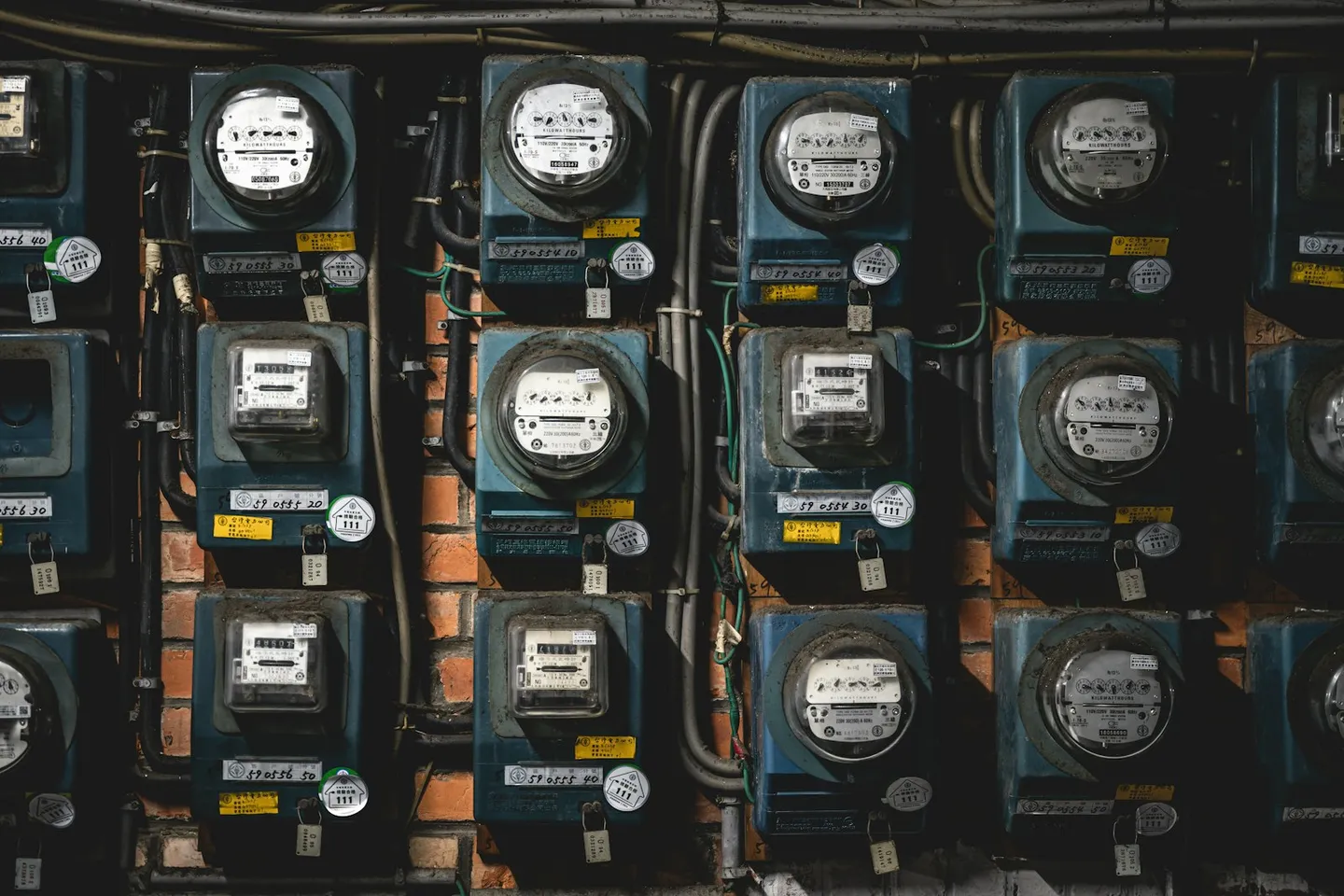
Photo by Simon Kadula on Unsplash.
Every list of the best industrial sensor intelligence platforms is written by a vendor, and the vendor always wins. This one is too. We build FrostLogic Explore, and it ranks first, so read accordingly. What we will do differently is name exactly where each competitor beats us, because on a few real axes, each of them does.
This isn't the same buyer as a BMS analytics comparison. A plant engineer cares about a pump bearing, a stamping-line servo, an OPC UA tag stream off a PLC on the industrial automation floor, not a chiller schedule. The platforms below read plant-floor telemetry, vibration, current draw, temperature, flow, and turn it into something a reliability team can act on before the line stops. Sensor coverage, the industrial IoT rollout most plants already did, was rarely the scarce resource on a factory floor. Turning what the sensors already produce into a ranked, explainable action is.
We ranked on four things: how much of the plant's actual signal set the platform reads, whether the output is a decision or another dashboard, how the platform behaves across ten plants instead of one, and what happens to your data and trained models if you leave.
1. FrostLogic Explore
Best for: manufacturers who want one causally-traced, ranked queue across every PLC, SCADA and OPC UA tag in the plant, instead of a per-machine dashboard.
Explore is a sensor data analytics platform that reads plant telemetry read-only by default, over OPC UA, Modbus or a PLC vendor's API. Write access to a setpoint stays off until you grant Explore a scope. Frostdynamics, the engine behind it, correlates signals across the physics that actually govern a piece of equipment, vibration, current draw, bearing temperature and flow together, rather than each against its own fixed threshold. A cross-signal drift that would sit under a single-tag alarm's radar gets caught weeks before a fixed threshold trips.
Causal filtering collapses the alarm storm a real fault generates into one ranked, explained ticket. A bearing failing upstream sets off flow, pressure and temperature alarms downstream; Explore traces the chain back to the one cause instead of leaving a reliability engineer eleven tickets to reconcile. Forecasting runs one hour to seven days out with confidence bounds, and simulation lets a team test a process change before touching the line. Hosting is EU-based (Hetzner), and both raw data and trained models are exportable from day one.
Where the others beat us: Augury backs every alert with a human-certified vibration analyst before it reaches you, a manual QA layer we don't run. Senseye carries the weight of Siemens' global service organisation behind it, useful if a plant is already Siemens-standardised. SKF's physics models on bearings and rotating equipment go deeper than ours on that specific asset class.
2. Augury
Best for: plants that want machine-health diagnostics with a human-certified vibration analyst behind every alert, and are prepared to buy Augury's sensor hardware to get it.
Augury, founded in 2011 in Haifa and New York by Gal Shaul and Saar Yoskovitz, sells Machine Health as a hardware-plus-software bundle: proprietary Halo sensors installed on the rotating equipment a plant wants watched, feeding an AI model the company describes as trained on the industry's largest vibration and acoustic dataset. The defining architectural choice is that no alert reaches a customer until a CAT III/IV certified vibration analyst has reviewed it, a manual review step most competitors skip. Augury covers 200+ published asset types and counts DuPont, Colgate-Palmolive and ICL among its named customers; a July 2025 Forrester Total Economic Impact study commissioned by Augury reports 5 to 20x ROI over three years.
In 2026 Augury extended into agentic action: AI Agents that, on a detected fault, create and populate a work order in the connected CMMS and assign it to a technician. That's a meaningfully different output than a ranked queue, closer to an autopilot model than an advisory layer, and worth knowing going in if a reliability team wants the diagnosis rather than an automated dispatch. Pricing is enterprise quote only, hardware included, and we found no published EU data residency commitment.
If certified human review on every single alert matters more to a team than architectural transparency, Augury's QA model is the strongest published version of it on this list.
3. Senseye (Siemens)
Best for: global manufacturers already standardised on Siemens automation who want predictive maintenance advisory with EU-hosted data, without buying new sensor hardware.
Siemens acquired Senseye in 2022 and folded it into its Digital Enterprise services as a cloud predictive maintenance layer. Unlike Augury, Senseye is built to work with data a plant already has, historians, existing IoT platforms, legacy machine data, or new sensors, without a proprietary hardware buy-in. It automatically models machine and maintainer behaviour to forecast failure, estimate remaining useful life, and prioritise risk across a plant, and Siemens' own product data sheet states that customer data resides and is processed in EU data centres, one of the few vendors on this list with that commitment in writing.
Named customers include BlueScope and the dairy processor Sachsenmilch, and Siemens cites typical ROI under three months with unplanned downtime commonly halved. The “Complete” tier bundles the software with an expert-managed onboarding service, useful for a plant without in-house reliability data science, though it also routes more of the workflow through Siemens services rather than the plant's own team. Pricing isn't published; onboarding into a customer's IT/OT landscape is billed separately, time and materials. Certification tracking and multi-vendor building-standard compliance sit outside Senseye's published scope; it is a plant-equipment tool, not a compliance platform.
If a plant already runs Siemens automation end to end, Senseye's fit and its written EU hosting commitment are hard to beat here.
4. SKF Enlight AI
Best for: heavy-industry plants with SKF-class rotating equipment and the budget for a performance-based reliability contract.
SKF built Enlight AI around AutoML models trained on the company's century of bearing physics, sold inside an ecosystem, Enlight Centro, that is heavily optimised for SKF's own QuickCollect and wireless vibration sensors. In a published case study at a South American steel mill, the platform read data from over 400 sensors and flagged failures up to eight days ahead of occurrence at a reported 93% accuracy rate, with an estimated 30% cut to unplanned downtime and 15% to operating cost. In 2026 SKF added Enlight ProCollect, a subscription bundling a handheld vibration sensor, mobile app and cloud analytics aimed at mid-sized plants that couldn't previously justify a full vibration programme.
The trade-off is the ecosystem itself. Third-party sensors work through workarounds rather than natively, and SKF's commercial model leans on fixed-fee, performance-based service contracts rather than published per-sensor pricing, so total cost depends heavily on how much of SKF's consulting layer gets bought alongside the software. We found no published EU data residency commitment for Enlight AI specifically.
If a plant runs mostly SKF bearings and rotating equipment and the buyer wants an OEM-grade reliability partner rather than a software vendor, SKF's physics depth on that exact asset class is hard to replicate.
The comparison at a glance
| FrostLogic Explore | Augury | Senseye (Siemens) | SKF Enlight AI | |
|---|---|---|---|---|
| Core focus | Ranked decision queue across plant telemetry | Machine-health diagnostics, human-verified alerts | Cloud predictive maintenance advisory | Bearing / rotating-equipment AI diagnostics |
| Data read | PLC, SCADA, OPC UA, Modbus | Proprietary Halo vibration/acoustic sensors | Historians, existing IoT, legacy machine data | SKF wireless vibration sensors (QuickCollect) |
| Output | Ranked decisions with evidence | Reviewed alert; 2026 agentic work order creation | Risk-prioritised advisory forecast | Fault alert + remaining-life estimate |
| Forecasting | 1 hour to 7 days, confidence bounds | Not in published materials | Remaining useful life, risk priority | Not in published materials |
| What-if simulation | Yes | No | No | No |
| Certification / compliance | ISO 50001 evidence trail | Not in published materials | Not in published materials | Not in published materials |
| Portfolio view | One queue across the whole estate | Multi-site expansion (published) | Standardised across thousands of assets/sites | Enterprise Tier-1 multi-site (published) |
| EU data residency | Yes, EU-hosted (Hetzner) | Not in published materials | Yes, EU data centres (Siemens data sheet) | Not in published materials |
| Data & model export | Day one, data and models | Not publicly documented | Not publicly documented | Not publicly documented |
| Pricing | Published on request, per building/site | Enterprise quote; hardware + software bundle | Enterprise quote; “Complete” tier adds managed service | Fixed-fee, performance-based contract; quote only |
Claims in competitor columns are drawn from each vendor's own published materials, case studies and product data sheets as of July 2026. “Not in published materials” means we could not find it publicly stated, not that the capability doesn't exist. Confirm directly with the vendor before ruling anything out.
Running industrial sensor intelligence across a plant portfolio
One plant with a dashboard is a project. Ten plants, each on a different SCADA vintage and a different sensor vendor, is a different problem. The question stops being “what's wrong on this line” and becomes “across every site I run, what do I fix first.” That's the scale question most industrial buyers hit within a year of a successful single-plant pilot, and it changes what the analytics layer needs to do: one ranked queue across sites, not ten separate dashboards nobody has time to open every morning.
We wrote up how we think about ranking waste and risk once the whole industrial estate is the unit, not the plant, on our page about industrial energy management software. For a deeper walkthrough of the predictive maintenance side, cross-signal fault detection, causal filtering, and where the CMMS boundary sits, our companion piece on predictive maintenance in manufacturing covers the same engine in more depth, and our manufacturing industry page covers the wider operational picture.
FAQ
Not sure this is even the right category? Our building analytics software guide breaks down building analytics software, BMS analytics and energy management software before you shortlist a platform.
What is an industrial sensor intelligence platform? It reads the sensor and process data a plant already produces, PLC tags, SCADA points, vibration, current draw, temperature, and correlates it to detect equipment degradation and process drift before a threshold alarm would catch it. It's the data layer under most smart manufacturing rollouts, not a separate sensor network.
How is this different from a BMS analytics platform? BMS analytics reads a building's control system: HVAC, lighting, occupancy. Industrial sensor intelligence reads a plant's process telemetry: PLCs, SCADA historians and OPC UA tags off production equipment. The underlying physics-aware detection logic is similar; the signal set and the buyer are different.
Do I need new sensors to get useful predictive maintenance results? Usually not. Most plants already have the PLC tags and SCADA points needed, often exposed through an OPC UA server. Augury and SKF both sell proprietary sensor hardware as part of their model; Senseye and Explore are built to read data a plant already has.
Is FrostLogic Explore a CMMS? No. Explore ranks and explains anomalies in process data; it doesn't issue or track work orders. Augury's 2026 AI Agents feature does write into a connected CMMS, which makes Augury the exception among the vendors here, not Explore. Explore and a CMMS are complementary, not competing categories.
Which of these fits a multi-site industrial estate best? Depends on what's already standardised. Senseye suits a Siemens-standardised plant fleet. SKF suits an estate dominated by SKF bearings and rotating equipment. Explore is built for the portfolio-ranking problem specifically: one queue, weighted consistently, across every site regardless of vendor.
What does OPC UA have to do with this? OPC UA is the vendor-neutral industrial protocol that exposes PLC and SCADA data in a consistent format, which is what lets a platform like Explore read mixed-vendor plant equipment without a bespoke integration per machine.
See it on your own plant's data
Bring an export of your OPC UA or SCADA tags and we'll walk through what a ranked, causally-traced queue looks like against your actual equipment, no proprietary sensor hardware required.
FrostLogic Explore brings sensor intelligence, scenario simulation, and grounded-inference AI to commercial and industrial buildings. Learn more about Sensor Intelligence or talk it through with us.
Curious how this would look on your building?
What's your building not telling you?
Tell us what you're trying to figure out: energy drift, a BMS you don't trust, compliance you're chasing. We listen first, then tell you straight whether Explore helps. 30 or 60 minutes, your pick. No commitment either way.