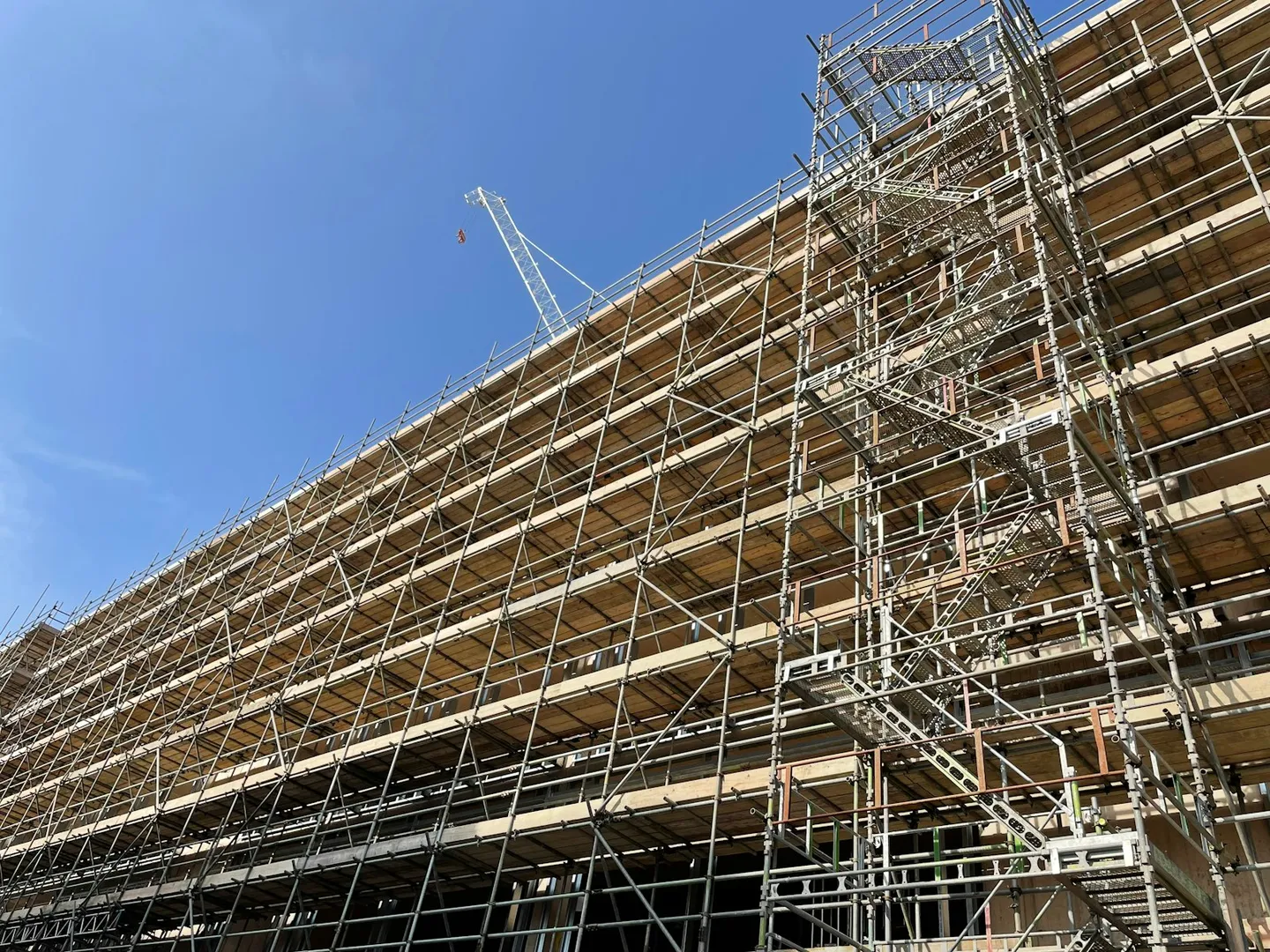
Photo by Karen Barrett on Unsplash.
A commercial building retrofit usually arrives as a capital story. Replace the chillers. Reskin the facade. Buy the vendor package that promises less energy and fewer complaints. Boards like plant because it is visible, bid-able and easy to put on a slide. Operators know the quieter truth: age is not condition, and a package without a measured baseline is a bet dressed as a plan.
Building retrofit, in commercial stock, should start with measurement. Meters and BMS trends first. Controls and retro-commissioning next. Deferred risk ranked with evidence. Capital last, sized to what the data still cannot fix. That sequence is how you stop funding the wrong plant with high confidence. It is also where Sensor Intelligence earns its keep: not as a dashboard, not as a CMMS, and not as a contractor, but as a prioritised decision queue grounded in the feeds you already run.
This piece owns that measure-before-capex frame for commercial building retrofit. The wider energy-efficiency order of operations, including England's Part L / ADL2 context for operators, sits in energy efficiency in commercial buildings. Use that umbrella for regulation depth. Use this page for retrofit sequencing.
What building retrofit usually means in commercial stock
In commercial and multi-let estates, building retrofit is not a weekend DIY envelope job. It is a package of work on an occupied or soon-to-be-occupied asset: plant replacement or major overhaul, controls and BMS upgrades, fabric and fenestration, sometimes lighting and renewables bolted on. Owners talk about "deep retrofit" when several of those land in one programme. Facilities teams talk about the Tuesday after handover, when the new kit still fights the old schedules.
Three layers show up in almost every commercial retrofit conversation:
- Plant. Chillers, boilers, AHUs, heat pumps, pumps and fans that have reached a replacement narrative, often because of age, noise, refrigerant phase-down or a vendor refresh cycle.
- Controls. Sequences, zoning, setpoints, schedules and the BMS points that describe what plant is actually doing. Retrofitting in buildings often fails here even when the metal is new.
- Fabric. Insulation, glazing, airtightness and solar control. Expensive, slow, and sometimes necessary. Rarely the first place a live meter will point if simultaneous heating and cooling is already burning the bill.
Residential contractor SERPs blur those layers into "home renovation." This guide stays commercial and operational: offices, retail units, warehouses, education and healthcare premises where a facilities or energy team owns the meters and the BMS.
Why capex-first fails
Capex-first fails for a boring reason. You cannot see which constraint is binding until you measure. A fifteen-year-old chiller can be fine. A five-year-old AHU with a stuck economizer and an overridden schedule can be the real waste. Public facilities coverage has been blunt on this: condition data beats age when you decide repair versus replace. Vendor narratives without a baseline skip that test.
Assessment before replacement is not a soft opinion. Industry retrofit writing has argued for years that the systems you already own often hold recoverable performance if you investigate them properly before you scrap them. That does not mean never replace plant. It means do not replace plant because the brochure says so, or because the capital line is easier to approve than a metering and controls programme.
The failure mode is familiar. An audit or a sales visit produces a ranked list of shiny measures. The top items are capital-heavy. Low-cost controls fixes sit at the bottom or never make the pack. Six months after the new plant lands, the same simultaneous heating and cooling pattern is still there, now with a nicer nameplate. Capex bought capacity. It did not buy honesty about operation.
Age also lies about deferred risk. A flat backlog ranked by complaint volume funds the loudest floor, not the asset closest to failure. Measurement reorders that list. Without it, every retrofit board pack is partly fiction.
What to measure first
Before you size a commercial building retrofit, collect a baseline from the feeds you already have. A commercial building energy audit can name opportunities on a date. It is not continuous management. Continuous truth comes from meters and controls.
Utility meters and submeters. Whole-building interval data, end-use where it exists, tenant separation where leases require it. If you cannot assign the large loads, you cannot prove a retrofit moved them. Energy monitoring and targeting is the UK operating habit for turning that data into weather-aware exceptions. Product-side, keep a living energy monitoring feed rather than a monthly PDF.
BMS trends, schedules and setpoints. Occupancy versus schedule. Heating and cooling overlap. Economizer and free- cooling behaviour. Zone setpoints nobody owns. Override flags left permanent after a heatwave. These are the cheap signals that usually explain the bill before fabric does.
Fault and anomaly signals. Repeat alarms, drifting approach temperatures, cycling that does not match the control story. Anomaly detection on existing points often surfaces the same findings an RCx team would write down, earlier.
Indoor comfort where it matters. Complaints clustered by floor and time of day, not only annual averages. Comfort is a retrofit driver in multi-let stock. Measure it with the same discipline as kWh, or you will fund plant for a zoning problem.
You do not need a new sensor farm to start. Most commercial buildings already produce enough signal to challenge a capex-first narrative. Where visibility is missing, add metering where end-use is still invisible. Do not wait for a perfect model before you read what you have.
Cheaper first step: retro-commissioning and controls before plant
The cheaper step before deep retrofit is usually building commissioning, retro-commissioning and MBCx. Retro-commissioning (RCx) investigates current sequences and setpoints against intent, tests functional performance, and corrects what is broken. BMS retro-commissioning often does most of the work without new metal: pull trends, check design intent, rewrite sequences that drifted or were wrong from day one.
Public RCx literature (including LBNL-style programme evaluations) has long treated measured savings as real but project-specific. Prefer the sequencing lesson over pasting a median percentage into your board pack: fix controls and operations with evidence, then decide what capital is still required. Many estates discover that a large share of the "retrofit need" was schedule, setpoint and simultaneous plant, not a dead chiller.
That is not anti-capex. It is anti-blind-capex. Plant replacement still wins when condition, refrigerant, capacity or reliability demand it. Measurement tells you when that is true.
How measurement re-ranks the capital backlog
Once you have a baseline and a controls pass, the capital backlog stops being a wish list. It becomes a ranked queue of deferred risk and remaining waste. That is the same discipline as deferred maintenance: condition and trajectory first, complaint volume second.
Measurement re-ranks retrofit options in three practical ways:
- It kills false plant replacements. If the meter and BMS show the waste is simultaneous heating and cooling on a bad schedule, a new chiller will not fix Tuesday night.
- It sizes real plant work. When the machine is actually degrading, trend evidence defends the capital line to finance better than "it is old."
- It sequences fabric honestly. Envelope packages still matter for deep programmes and compliance pathways. They should not jump the queue ahead of free operating wins the building is already screaming about.
A commercial building retrofit programme that cannot show this reorder is still a vendor narrative. Demand the baseline, the controls fixes already taken, and the residual ranked list before you sign the plant PO.
Where this sits under energy-efficiency order of operations
Retrofit sequencing is one chapter of a wider operator order of operations. The umbrella guide energy efficiency in commercial buildings lays it out as audit, benchmark, commission or retro-commission, continuous monitoring and targeting, then plant and deep retrofit. This article zooms the last step: what to measure before you spend on building retrofit itself.
For commercial property teams, the product home for that operating layer is energy management systems for commercial buildings. Regulation themes (Part L / ADL2 controls, metering and BACS in England) belong on the umbrella page. Do not treat this retrofit article as a substitute for building-control advice, and do not invent numeric thresholds here.
Where Explore fits
FrostLogic Explore is Sensor Intelligence for estates that already have meters and a BMS. It runs grounded inference on those feeds and returns a prioritised decision queue priced by cost and confidence. The dashboard asks questions. The queue answers them.
Explore sits in the measure-and-rank layer of a commercial building retrofit programme. It helps you see which controls fixes and which deferred risks should land before plant spend. It does not replace your BMS. It is not a CMMS: work orders stay in the maintenance system you already run. It is not a retrofit contractor and it does not bid fabric packages.
Automation is optional and scoped. Explore starts read-only by default. Write access starts off. The FrostLogic Edge Agent writes only after human review, or automatically inside permissioned scopes you grant. Nothing moves a setpoint until that scope exists.
If you want a soft read before a call, take the Building Intelligence Score. Twelve questions, a free score, and a clear view of the gaps. When you are ready to walk findings on a live building, talk it through.
Frequently asked questions
What does building retrofit mean for a commercial estate? In commercial stock it usually means plant, controls and fabric work on an occupied or multi-let asset, not residential DIY. A useful programme starts from meters and BMS trends, not from a vendor package alone.
Why not start with plant replacement? Age is not condition. Capex-first packages often optimise equipment that was never the binding constraint. Establish a measured baseline, fix controls and operations, then size capital against what remains.
What should we measure before funding a commercial building retrofit? Utility and submeter intervals, BMS schedules and setpoints, fault and anomaly signals, and comfort complaints where they drive the case. An energy audit helps name opportunities; continuous feeds keep the baseline honest after the report closes.
Is retro-commissioning part of retrofit or a substitute for it? Both, in sequence. RCx and BMS controls work are usually the cheaper first step. They often remove enough waste that the residual capital list shrinks or reorders. They do not replace plant when condition or capacity truly demand it.
How does this relate to deferred maintenance? Measurement turns a flat capital and repair backlog into a ranked queue by risk and cost. Retrofit spend and deferred maintenance compete for the same budget line; both need evidence, not complaint volume alone.
Where does Explore sit in a retrofit programme? Explore reads existing meters, BMS points and sensors into a ranked decision queue. It supports measure-before-capex sequencing. It is Sensor Intelligence, not a CMMS and not a contractor. Write-back starts off and is granted per scope.
Does this page cover Part L or deep fabric design? No. England's Part L / ADL2 operator themes and the full measure-before-retrofit order of operations live on energy efficiency in commercial buildings. This page owns retrofit sequencing and what to measure before plant spend.
Want to see what a ranked queue looks like before the next plant PO? Talk it through with us and we will walk the findings Explore surfaces from the meters and BMS you already have.
Not ready for a call? Get your Building Intelligence Score. Twelve questions, a free score, and a clear view of where the building is leaking value.
FrostLogic Explore brings sensor intelligence, scenario simulation, and grounded-inference AI to commercial and industrial buildings. Learn more about Sensor Intelligence or talk it through with us.
Curious how this would look on your building?
What's your building not telling you?
Tell us what you're trying to figure out: energy drift, a BMS you don't trust, compliance you're chasing. We listen first, then tell you straight whether Explore helps. 30 or 60 minutes, your pick. No commitment either way.