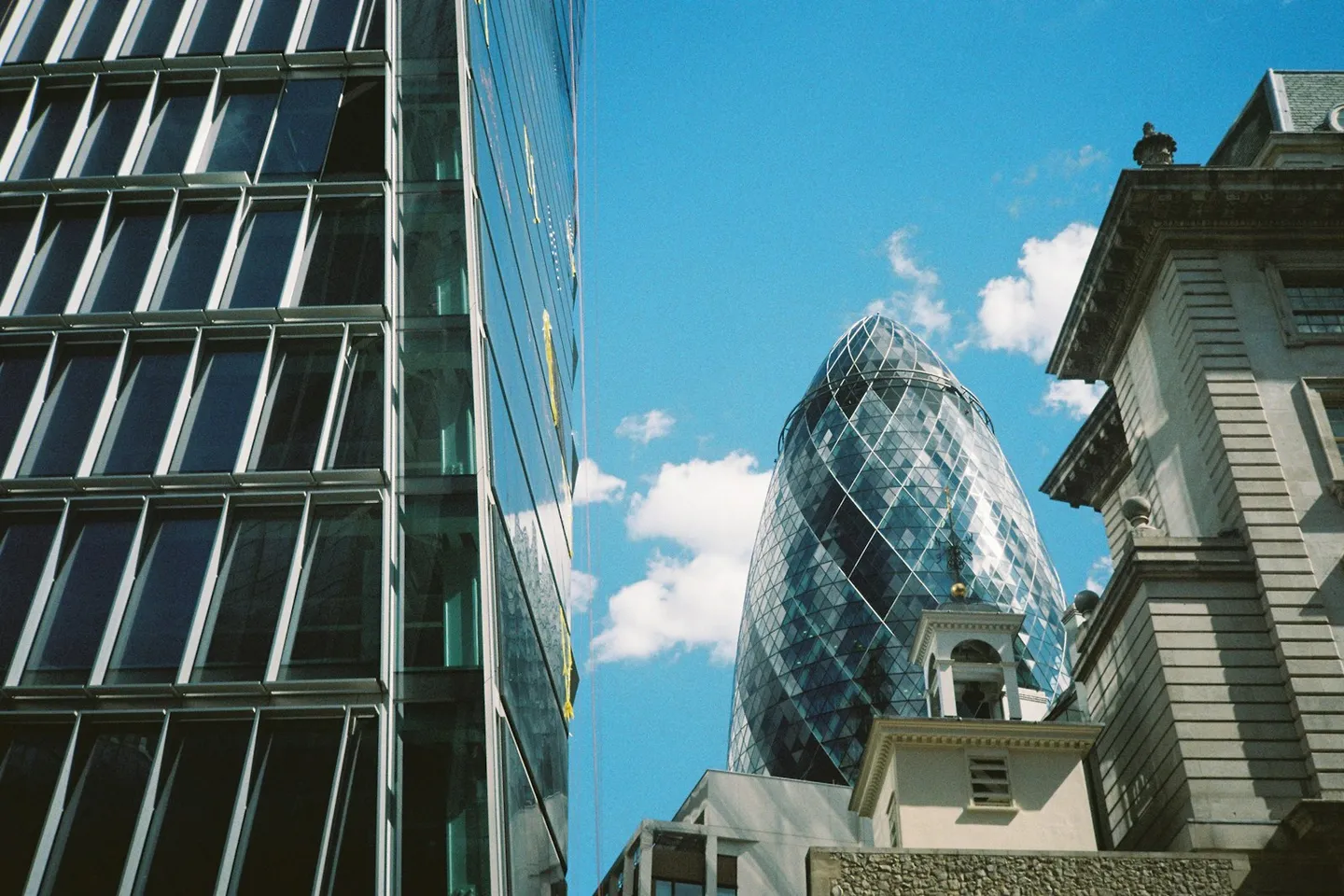
Photo: 30 St Mary Axe (the Gherkin), City of London. Photo by Nick Page on Unsplash.
Energy efficiency in commercial buildings is usually sold as a design problem: U-values, models, and a certificate before handover. Operators live a different reality. The meters already run. The BMS already schedules plant. Tenants already complain about the floor that overheats on Fridays. The question is not whether the building was modelled well in 2019. It is whether this week's kilowatt-hours match what the estate should use given weather, occupancy and the controls you actually run.
This guide is the umbrella for that operating problem in England: what building energy efficiency means once the building is live, how Part L and Approved Document L Volume 2 frame controls and metering for non-dwellings, and the order of operations that keeps capital spend honest. It is written for facilities, energy and BMS teams, not for architects picking glazing. Italian and Spanish operators have locale-native siblings on the same slug: efficienza energetica edifici and eficiencia energética edificios.
What energy efficiency means once the building is open
In an operating commercial building, energy efficiency of a building is the gap between useful service delivered and energy consumed to deliver it. Comfortable occupied hours, safe indoor air, process loads that must run, and the minimum plant needed to hold those conditions. Everything else is waste: simultaneous heating and cooling, setpoints nobody owns, schedules left on after a fit-out, chilled water fighting a free-cooling opportunity, lighting zones that never learned the tenant moved out.
That definition matters because it changes the toolkit. Design-stage modelling and "energy efficient building design" SERPs answer a different buyer. Operating efficiency starts from the feeds you already have: main meters, submeters, half-hourly data, and the BMS points that describe what plant is doing. If you cannot see end-use and status, you cannot manage building energy efficiency. You can only argue about bills.
Energy consumption in commercial buildings tells you where the national and sector totals sit. This page is about what you do on your sites after those totals stop being interesting.
Part L and Approved Document L Volume 2: what operators should actually read
Part L of the Building Regulations in England is Conservation of fuel and power. For buildings other than dwellings, the technical guidance lives in Approved Document L Volume 2 (ADL2). That is the document people mean when they say building regulations energy efficiency for offices, retail units, warehouses, education and healthcare premises.
Which edition applies. The 2021 edition incorporating 2023 amendments is the guidance still used for most live work that falls under those standards. GOV.UK also publishes a 2026 edition of ADL2 for buildings subject to the 2026 standards; that edition takes effect on 24 March 2027 for ordinary building work in England (24 September 2027 where the work is in connection with higher-risk building work), with transitional arrangements set out in Circular Letter 01/2026. Do not assume "2026 edition" means every project on site today. Check which standards apply to the notice or plans for the work in front of you, and read the matching PDF on GOV.UK rather than a consultant's slide deck.
For operators, four themes in the 2021 ADL2 (with 2023 amendments) matter more than fabric tables.
Controls and zoning. New and replacement space heating systems are expected to be subdivided into separate control zones where solar exposure, pattern of use or type of use differ significantly, with independent time and temperature control per zone. Thermostatic room controls are part of that story. The point for an operator is blunt: if zoning exists on paper but every floor still tracks one poorly placed sensor, Part L-shaped compliance did not produce energy efficiency in building operation.
Energy submeters. When new buildings are built, or when fixed building services are provided or extended in an existing building, ADL2 expects energy submetering that can assign the large majority of each fuel's annual consumption to end-use categories (heating, lighting, cooling and so on), enable forecast versus in-performance comparison, separate tenants, and monitor renewables separately. Buildings above the floor-area threshold in the Approved Document also need automatic meter reading and data collection. Detailed how-to for metering strategy sits in CIBSE TM39. Submeters that nobody trends are decorative copper; they do not create energy efficiency building regulations outcomes on their own.
Building automation and control systems (BACS). For new buildings with space heating or air-conditioning above the effective rated output threshold in ADL2, a BACS should be installed. When an existing building at that scale replaces or installs a BACS, the specification clauses apply: continuous monitoring and logging of energy use, analysis and the ability to adjust, benchmarking and loss detection for HVAC, and interoperable communication with fixed building services. A BMS that only alarms is not automatically a Part L BACS. Read the functional clauses. The EU EPBD BACS rules are a sibling conversation for estates that also sit under EU or transposed Member State law; England's Part L path is the ADL2 text.
What this page will not invent. Numeric U-values, carbon factors, and exact output or floor-area cut-offs change with editions and amendments. Cite the live GOV.UK PDF for the work you are doing. This article names the themes operators inherit; it does not replace building-control advice.
Domestic Minimum Energy Efficiency Standards (MEES) sit beside Part L for landlords of certain rented stock. They are not a substitute for operating efficiency on a commercial estate, and the detail belongs on that page.
Measure before you spend: the order of operations
Most estates jump to plant. New chillers, LED wholesale, envelope packages, a shiny energy management system licence. Capex is easier to approve than a boring metering and controls programme. That is how you fund the wrong project with high confidence.
A saner sequence for energy efficiency in commercial buildings looks like this.
1. Audit. A commercial building energy audit (ASHRAE Level 1–3 or the local equivalent) gives you a dated, engineer-led baseline and a ranked list of measures. Use it to name the opportunities. Do not treat it as continuous management.
2. Benchmark. Energy benchmarking for commercial buildings puts the whole-building result in peer context, often for ordinance or internal ranking. It tells you where you sit. It does not tell you which AHU is fighting itself on Tuesday night.
3. Commission / retro-commission. Building commissioning, retro-commissioning and MBCx ask whether systems perform as designed and fix what does not. Recurring audit findings that never die are often a commissioning problem wearing an energy costume.
4. Continuous monitoring and targeting. Energy monitoring and targeting is the UK operating method: measure, set a weather-aware target, act on exceptions. Pair it with a living energy monitoring feed, not a monthly PDF. This is where drift gets caught between audits.
5. Then plant and retrofit capex. Only after the waste has a name, a size and a cause should you spend on major plant replacement or deep retrofit. Measure before you fund the replacement. If the sequence is reversed, you optimise equipment that was never the binding constraint.
That order is the whole commercial argument. Energy efficiency building regulations set floors for work. They do not run your Tuesday. The operator sequence does.
Where Sensor Intelligence fits
FrostLogic Explore is Sensor Intelligence for estates that already have meters and a BMS. It reads those feeds, reasons over them with FrostDynamics™ (grounded inference, EU-hosted), and returns a prioritised decision queue priced by cost and confidence. The dashboard is the question. The queue is the answer.
That is the missing middle between Part L-shaped metering and a facilities team that still opens twenty screens. Explore does not replace the BMS. It does not pretend to be a CMMS. Work orders stay in the maintenance system you already run. It sits on the measure-and-decide layer described above, which is also the commercial home for energy management systems for commercial buildings.
Automation is optional and scoped. Explore starts read-only by default. Write access starts off. The FrostLogic Edge Agent writes only after human review, or automatically inside permissioned scopes you grant. Nothing moves a setpoint until that scope exists.
If you want a soft read on where the estate sits before a call, take the Building Intelligence Score. Twelve questions, a free score, and a clear view of the gaps. When you are ready to walk findings on a live building, talk it through.
FAQ
What does energy efficiency in commercial buildings mean for operators? It means delivering required comfort, safety and process service with the least avoidable energy. In a live building that is mostly a controls, metering and operating problem: schedules, setpoints, simultaneous plant and unowned exceptions. Design fabric still matters, but operators inherit the gap between model and meter.
How do building regulations energy efficiency rules relate to day-to-day operation? Part L and Approved Document L Volume 2 set England's energy efficiency requirements and guidance for building work on non-dwellings, including controls, zoning, energy submeters and BACS. They apply when relevant building work is done. Day-to-day efficiency still depends on whether those meters and controls are used for continuous monitoring and exception action after handover.
Which Approved Document L Volume 2 edition should I use? Use the edition that matches the standards applying to your work. The 2021 edition incorporating 2023 amendments covers much current work. The 2026 ADL2 edition is for work subject to the 2026 standards and takes effect on the dates published on GOV.UK (including 24 March 2027 for ordinary building work in England). Confirm against the live publication and any circular letter for transitional arrangements.
What is the right order of operations before retrofit spend? Audit to name opportunities, benchmark for peer context, commission or retro-commission to fix performance gaps, run continuous monitoring and targeting to catch drift, then fund plant or deep retrofit. Skipping to capex without that loop is how estates buy the wrong project.
Do I need new meters to improve building energy efficiency? Not always. Many commercial buildings already have main meters with interval capability, some submeters and a BMS. Start by collecting and acting on those feeds. Add submetering where end-use or tenants are still invisible, in line with a TM39-style strategy and any ADL2 work triggering metering requirements.
Is a BMS the same as a Part L building automation and control system? Not necessarily. ADL2 defines BACS by functions such as continuous energy monitoring and logging, analysis and adjustability, efficiency loss detection and interoperability. A BMS may or may not meet those clauses. Check the specification against the Approved Document, not the brand name on the head-end.
Where does FrostLogic Explore fit in this sequence? Explore reads existing BMS points, meters and sensors and returns a ranked queue of energy decisions. It supports the continuous monitoring and targeting step and the commercial buildings energy-management path. Write access starts off; Edge Agent write-back is only after review or inside scopes you grant. It is not a CMMS.
Is this the same as MEES or Irish BER? No. MEES is a separate England/Wales landlord minimum-efficiency regime for certain rented properties. Irish Building Energy Rating (BER) is out of scope here. This guide is about operating energy efficiency in commercial buildings under England's Part L / ADL2 frame and the operator order of operations.
Want to see what a ranked queue looks like on one of your buildings? Talk it through with us and we will walk the findings Explore surfaces from the meters and BMS you already have.
Not ready for a call? Get your Building Intelligence Score. Twelve questions, a free score, and a clear view of where the building is leaking value.
FrostLogic Explore brings sensor intelligence, scenario simulation, and grounded-inference AI to commercial and industrial buildings. Learn more about Sensor Intelligence or talk it through with us.
Curious how this would look on your building?
What's your building not telling you?
Tell us what you're trying to figure out: energy drift, a BMS you don't trust, compliance you're chasing. We listen first, then tell you straight whether Explore helps. 30 or 60 minutes, your pick. No commitment either way.