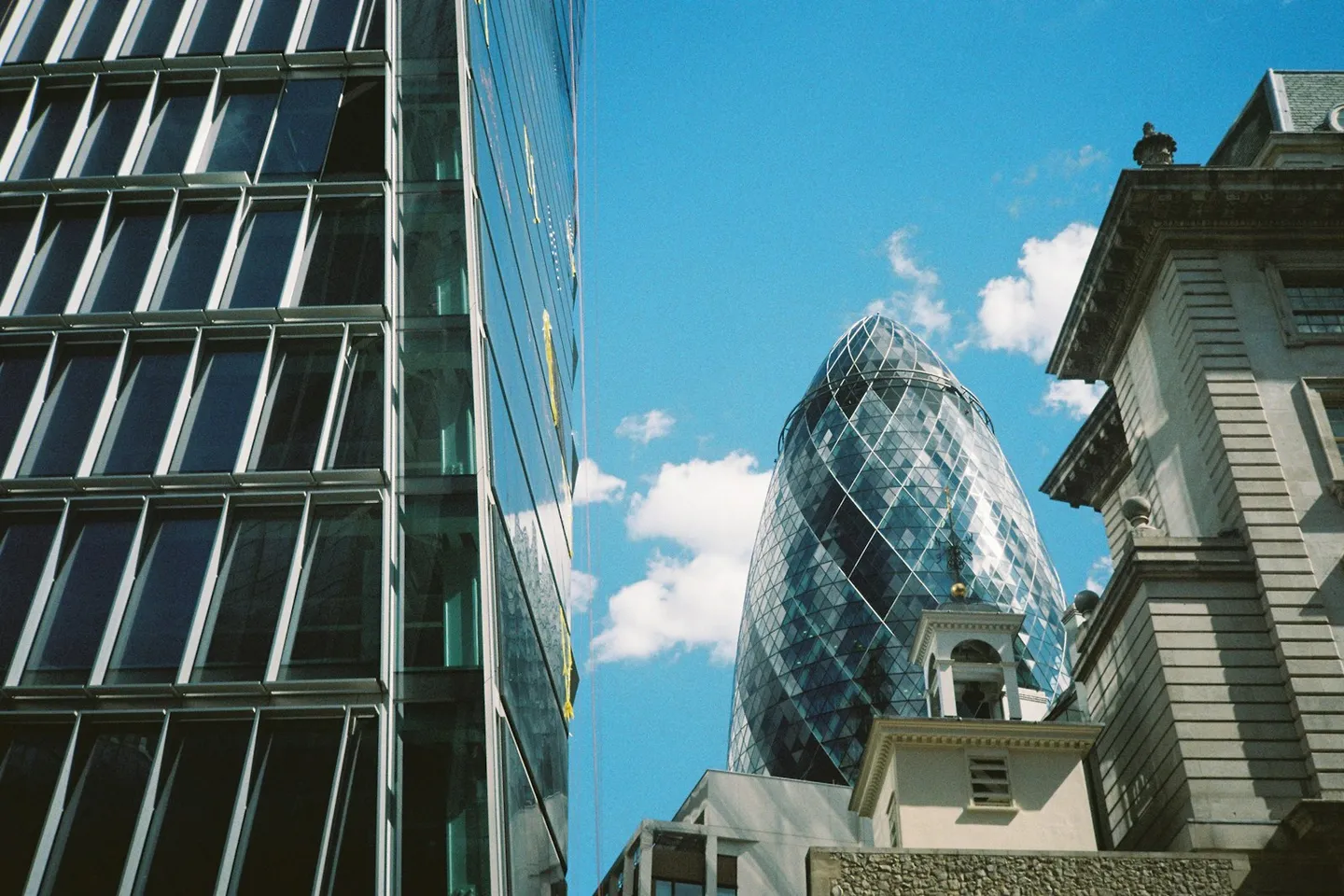
Photo by Patrick Tomasso on Unsplash.
A digital twin building is not a pretty 3D model sitting on a shared drive. It is a live operations model of a real asset: geometry and systems wired to the signals the building produces, kept honest after handover when tenants move walls, technicians rename points, and the as-built you were handed starts to lie.
Vendors often blur three different jobs under one label. Design-phase BIM. A construction coordination model. An operational twin that still matches the plant two winters later. Only the last one has to survive contact with facilities reality. This guide stays buildings-scoped: how a BIM digital twin is supposed to become an operational twin, where the handover usually fails, what it costs to keep the model alive, and when a full twin is justified versus when sensor intelligence on existing feeds is enough.
If you want the category comparison first, read digital twin vs sensor intelligence. This piece owns the life cycle after that fork: from model to day-two operations.
BIM vs an operational twin
BIM (Building Information Modelling) is a design and delivery tool. It coordinates geometry, clashes, quantities, and often a first pass at asset data before anyone occupies the floor. In digital twin in construction work, that model earns its keep during design reviews, shop drawings, and site coordination. Digital twin architecture pitches often stop there: a navigable 3D scene that looks like the finished building.
An operational twin has a different job and a different lifespan. It has to answer questions after practical completion: which AHU is drifting, what the plant did last Tuesday at 06:00, whether the chilled-water sequence still matches intent. That requires live feeds from the BMS, meters, and IoT, plus a schema that still maps those points to the right assets after the first tenant fit-out.
Dumping an as-built model onto a server does not create a twin. Raw material is not a twin. Without continuous reconciliation against how the building actually runs, you have an expensive picture of a building that used to exist. The geometry can be exquisite and still useless for next week's energy review.
A useful rule of thumb: BIM ends when the project team demobilises. An operational twin starts when the O&M team has to trust the model enough to act on it. Most programmes quietly fail in the gap between those two moments.
Digital twin architecture conversations often mix LOD (level of detail) with operational usefulness. A high-LOD shell with a weak point map still fails the Tuesday morning test. Prefer a thinner geometric model with clean asset and point identity over a dense mesh nobody maintains. Construction teams optimise for clash and quantity. Operations teams optimise for "which object is this tag talking about, today." Those optimisation targets conflict unless someone owns the translation after practical completion.
The handover that usually fails
Handover packs are thick. Useful twins are thin and structured. What tends to survive into operations:
- Structured asset registers with stable IDs, not only drawing sheet numbers.
- Point maps that tie BMS tags to equipment and spaces (and that still match the live system).
- O&M content you can query, not a PDF stack nobody opens. See O&M manuals for why the format matters as much as the content.
- Meter hierarchies and relationships that survive portfolio tooling, ideally landed in something like a building data warehouse rather than a one-off project share.
What usually rots:
- Soft geometry edits that never re-enter the federated model after a fit-out.
- Renamed or relocated BMS points with no model update.
- Temporary sequences left permanent after commissioning.
- "As-built" drawings that were never field-verified against the installed plant.
- Vendor models that stay behind a login the facilities team does not own.
The failure mode is predictable. The construction twin was paid for by CapEx. Day-two ownership sits in OpEx, often with no named owner for model integrity. Six months later the 3D scene still opens, and nobody notices the chilled water pump that was swapped is still the old unit in the twin. Operators stop trusting it. Trust, once gone, rarely returns via another visualisation licence.
If your goal is operational truth rather than a tourable model, invest first in the feeds and the asset/point map. The pretty shell can wait. Many portfolios never need it.
One practical test at handover: can a night-shift engineer find the live point for the asset shown in the model in under two minutes, without calling the person who built the federation? If not, the twin is not operational yet, however good the fly-through looks in the board pack.
What it costs to keep one alive
Published vendor figures for digital twin programmes are directional at best. Treat them as order-of-magnitude signals, not a quote. Public case material from Autodesk and from programmes associated with the Better Buildings Partnership (including retail portfolio work around URW / Westfield sites) tends to emphasise integration effort, data cleansing, and ongoing model stewardship at least as much as the 3D viewer. That matches what owners actually pay for. Use those stories to pressure-test your own scope, not to paste a payback percentage into a business case.
Break the cost into workstreams rather than a single licence line:
- Model build and reconciliation. Reconciling drawings against installed plant, especially on renovated stock, can rival a mid-size controls upgrade. Existing buildings with layered fit-outs are the expensive case.
- Integration. Connecting BMS, meters, and IoT into a coherent schema. Point naming debt shows up here as cash.
- Cleansing and semantics. Making "AHU-3" mean the same thing in the twin, the BMS, and the CMMS you already run (Explore is not that CMMS; it does not replace work-order software).
- Model drift. Every tenant change, equipment swap, and point rename opens a gap. Someone has to close it on a cadence, or the twin decays into marketing collateral.
- People. A twin without a named steward is a project that finished, not a capability you still have.
The recurring cost is where programmes die. Upfront modelling is a CapEx conversation. Drift management is OpEx forever. If the business case only prices the build, it is incomplete.
A cheaper honesty check: if you cannot fund continuous point-map and asset updates, you do not have an operational twin budget. You have a visualisation budget. Those are different purchases.
Owners also under-price the organisational cost. Who approves a model change after a fit-out? Who rejects a BMS rename that breaks the map? Without a change-control habit similar to how you treat drawings under construction, the twin becomes a museum of last year's plant. Process cost here beats hype ROI slides every time we have audited a stalled programme.
When a twin is justified vs when sensor intelligence is enough
A full geometric twin earns its keep in a short list of situations:
- Design-phase and digital twin in construction workflows, before there is an occupied building to read.
- Complex new-build with tightly coupled systems (hospitals, labs, some data halls) where clash and sequence risk is high before handover.
- Genuine geometry-bound what-if questions: facade options, major plant relocation, spatial logistics for a retrofit.
It is weaker as the default answer for an already-running smart building that already produces BMS, meter, and IoT data every few minutes. Those assets usually have a decision problem, not a missing 3D problem: too many signals, not enough ranked action.
Sensor intelligence reads those existing feeds into a ranked queue with evidence behind each item. It does not require a full geometric replica first. Virtual sensors can fill gaps where a physical point is missing; see also virtual sensors in buildings. Operational what-if simulation can test setpoint and schedule changes against the building's own history without standing up a separate 3D environment to keep in sync.
Use the twin when the question is about geometry or a building that does not exist yet. Use sensor intelligence when the building is open, occupied, and already talking. Few teams need both at full intensity at once. When they do, sequence them: twin for design and hard handover, sensor intelligence for day-two operations.
Where FrostLogic Explore sits
Explore is sensor intelligence for commercial and industrial estates. It runs grounded inference on the feeds you already have, ranks waste and faults by cost, and stays out of the geometric-twin product category on purpose.
Connection posture matters for buyers who have been burned by opaque write claims. Explore starts read-only by default. Write-back happens only under permissioned scopes through the FrostLogic Edge Agent when you grant them. That is not a CMMS, and it is not a promise to replace your BIM authoring stack. It is an operations layer on top of the signals the estate already produces.
If your board asked for "a digital twin" and what they actually need is fewer surprises in next month's energy and plant queue, say so early. Buying the wrong object is expensive twice: once for the licence, again for the credibility hit when the model and the building diverge.
Frequently asked questions
What is a digital twin building in practice? A live operations model of a building that stays reconciled to real geometry, assets, and sensor feeds after handover. A static as-built file is not a twin until it stays honest against how the plant actually runs.
How is a BIM digital twin different from an operational twin? BIM serves design and construction. An operational twin serves day-two decisions and has to track change after occupation. Same family of models, different owners, budgets, and failure modes.
What usually breaks at handover? Soft updates never re-enter the model, BMS points get renamed without a map update, and nobody owns model integrity in OpEx. The viewer still opens; trust does not.
What does it cost to keep a digital twin alive? Licence fees are rarely the whole story. Integration, cleansing, point-map upkeep, and named stewardship dominate. Treat vendor case numbers as directional; price the drift work explicitly.
Do I need a digital twin if I already have a BMS? Not automatically. A BMS controls and alarms; it does not maintain a geometric twin. For many operating buildings, reading BMS and meter data into a ranked decision queue is the higher-ROI path. A twin is justified when geometry-bound design or complex new-build questions dominate.
Is FrostLogic Explore a digital twin product? No. Explore does not sell a full geometric twin. It applies grounded inference to existing building feeds, starts read-only by default, and supports permissioned write-back only when you grant scopes. It does not replace a CMMS or a BIM authoring suite.
What's your building not telling you?
Tell us what you're trying to figure out: energy drift, a BMS you don't trust, a twin programme that stopped matching the plant. We listen first, then tell you straight whether Explore helps. 30 or 60 minutes, your pick. No commitment either way. Talk it through.
FrostLogic Explore brings sensor intelligence, scenario simulation, and grounded-inference AI to commercial and industrial buildings. Learn more about Sensor Intelligence or talk it through with us.
Curious how this would look on your building?
What's your building not telling you?
Tell us what you're trying to figure out: energy drift, a BMS you don't trust, compliance you're chasing. We listen first, then tell you straight whether Explore helps. 30 or 60 minutes, your pick. No commitment either way.